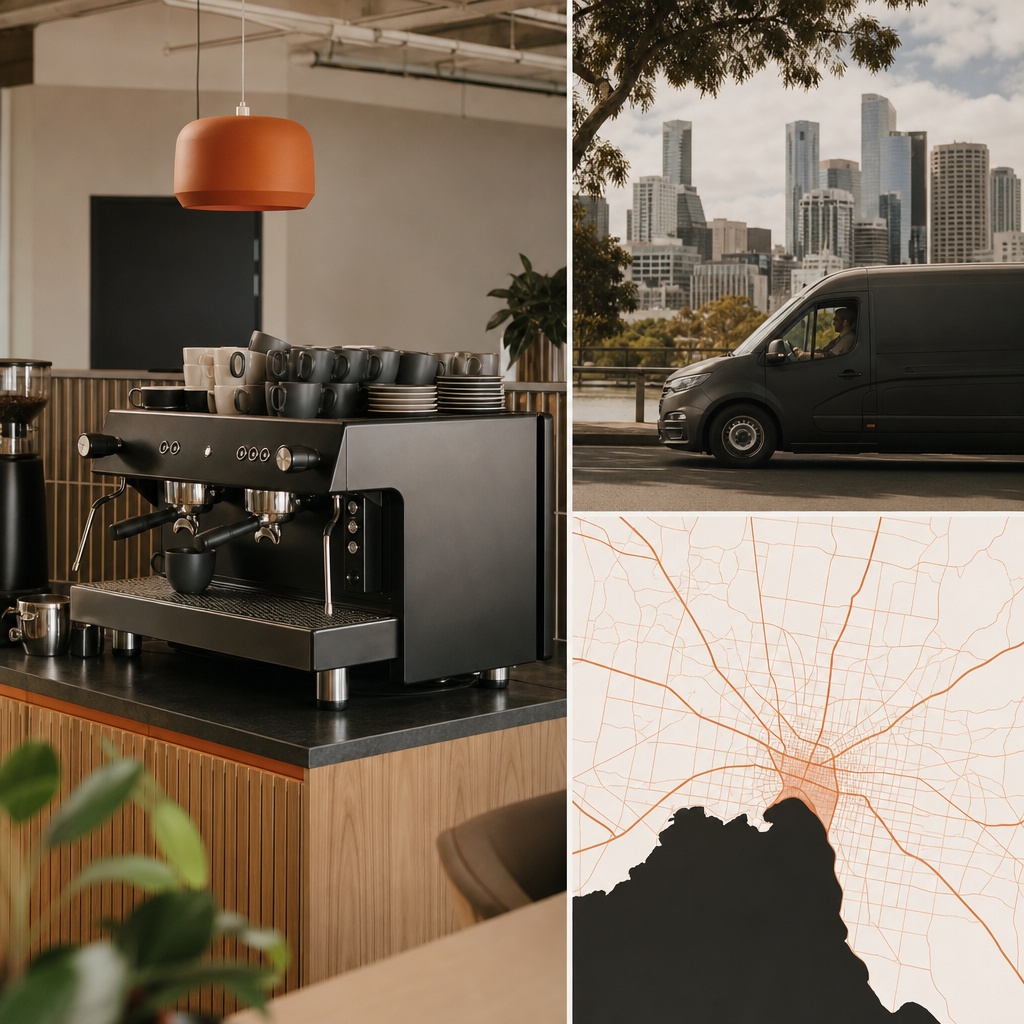
Boutique Coffee supplies, installs and services commercial workplace coffee machines across Melbourne. Coverage includes machine rental, installation, staff training, scheduled servicing, repairs, coffee bean delivery and consumable restocking. Because serviceability depends on the workplace location and site requirements, each address is confirmed directly before a machine is recommended.
Melbourne workplaces should not have to choose between café-quality coffee and dependable office support. Both matter. A machine is only useful when it suits the team, the beans are fresh and someone takes responsibility when an issue occurs.
This guide explains our Melbourne service coverage, what our deliveries include, how quickly we respond and how to confirm whether we can support your workplace. It also explains why I would rather decline an unsuitable site than make a service promise I cannot keep.
Key takeaways
Boutique Coffee is a Melbourne-only workplace coffee business, not a national equipment distributor. Our coverage model is built around personal accountability, practical delivery routes and ongoing machine care. These are the main points to understand before asking us to assess your office, showroom, warehouse or customer-facing workplace.
- We service workplaces across Melbourne, subject to confirming the address and site requirements.
- Coverage includes much more than dropping off coffee beans or arranging equipment freight.
- One person remains accountable from the first site visit through to ongoing support.
- Boutique Coffee's supplied 2026 client data records a typical service-call response time of 24 hours.
- Rentals are month-to-month, with one month's notice to exit and free machine pickup.
- Machine choice is based on actual team size, drink demand, site access and available services.
Service coverage summary
Coverage is assessed as an operating commitment, not a line drawn loosely around Melbourne on a map. The table below explains what each part of our service means in practice. Exact suitability still depends on the address, machine requirements, access and whether the site can support a proper commercial installation.
| Service area | What Boutique Coffee provides | What must be confirmed |
|---|---|---|
| Melbourne workplaces | Commercial machine rental and ongoing support | Workplace address and practical serviceability |
| New installations | Site assessment, delivery, connection, setup and training | Power, water, drainage, bench space and access |
| Coffee deliveries | Fresh beans matched to workplace preferences | Consumption, storage and preferred visit rhythm |
| Scheduled visits | Machine checks, cleaning support and consumable restocking | Usage level and suitable access times |
| Breakdown support | Direct troubleshooting and on-site attendance when required | Fault type, parts availability and site access |
| Machine collection | Removal after rental cancellation or an agreed equipment change | Collection access and machine condition |
Where does Boutique Coffee provide workplace coffee service?
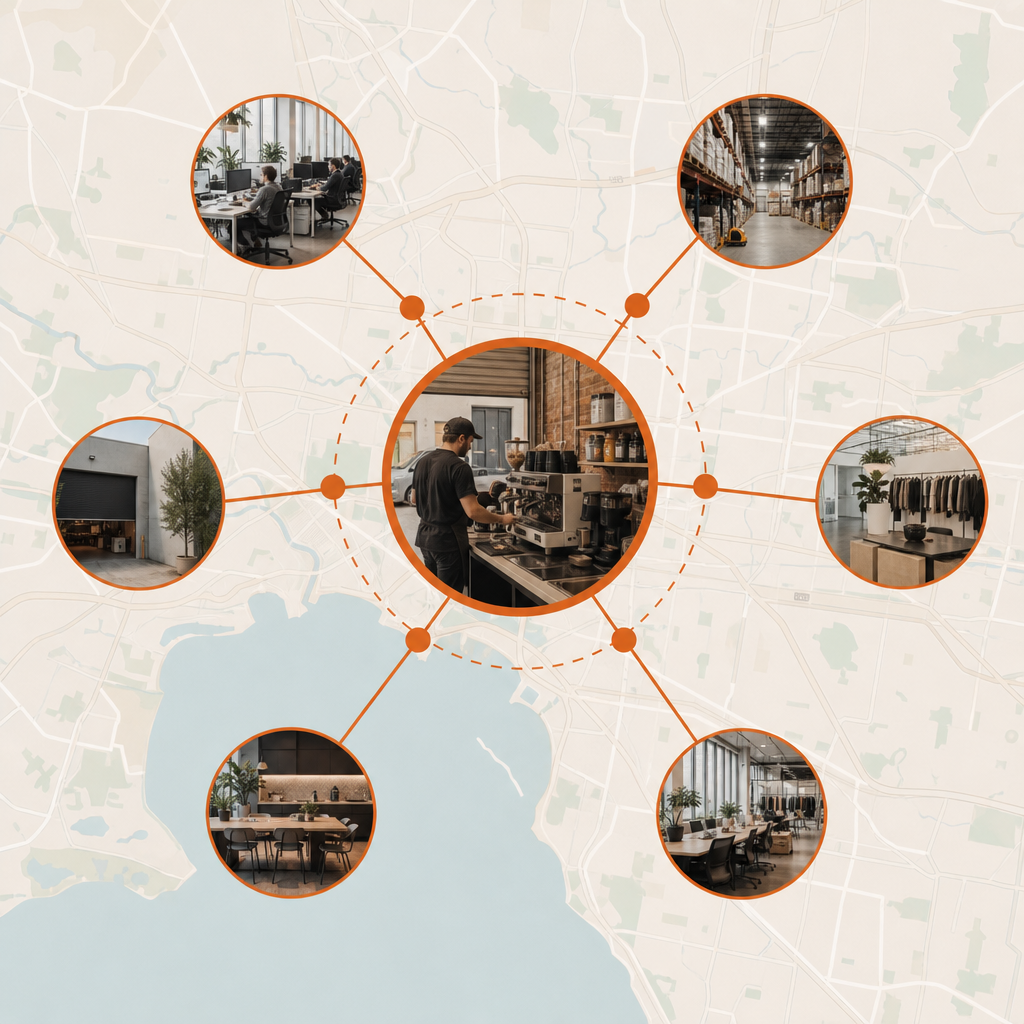
Boutique Coffee services workplaces across Melbourne, with every address checked before we commit. We do not publish an inflated suburb list or imply that every Victorian postcode receives identical support. Coverage depends on whether we can install, deliver and respond reliably from that location over the life of the rental.
Our focus is metropolitan Melbourne. That can include offices, warehouses, showrooms, workshops, professional practices and busy retail workplaces. The business has remained Melbourne-only since it was founded in 2008.
That focus is chosen on purpose. Commercial coffee service is physical work. Someone must inspect the site, install the machine correctly, adjust the grinder, deliver beans, replace consumables and attend when a fault cannot be resolved by phone.
A supplier can send equipment almost anywhere. That does not mean it can provide dependable coverage there.
Why we confirm individual addresses
Terms such as "Melbourne", "Greater Melbourne" and "metropolitan Melbourne" can refer to different boundaries. The Australian Bureau of Statistics uses formal geographic classifications for statistical purposes, but a practical service area also depends on roads, access windows and travel between client sites.
For that reason, we confirm the actual workplace address rather than relying only on a postcode label. Two sites within the same broad area can require different service arrangements. Consider the difference between:
- an office with unrestricted weekday access and nearby parking
- a secure warehouse requiring induction before every visit
- a shopping centre tenancy with loading dock booking rules
- a high-rise office with restricted goods-lift access
- a workplace operating mainly outside standard business hours
None of those conditions automatically makes a site unsuitable. They do affect how installation, delivery and breakdown attendance should be planned.
What about regional Victoria or interstate locations?
We do not present Boutique Coffee as a national coverage network. Our model is founder-led, always, and built around direct Melbourne service. I would rather tell a regional or interstate business that we are not the right fit than ship a machine and leave them dependent on an unknown third party.
If your workplace is outside our practical service area, ask anyway and provide the full address. We can assess the situation honestly. Where we cannot deliver the standard of support I consider necessary, I will say so and may suggest looking for a genuinely local commercial coffee specialist.
What is included within our service coverage?
Our coverage includes machine selection, site assessment, installation, staff training, coffee supply, planned servicing and breakdown support. It is a complete workplace coffee arrangement rather than an equipment delivery. The aim is simple: your team gets consistent coffee while one accountable person manages the system behind it.
Commercial coffee machine rental
The machine is selected for the team's real requirements. That means looking at staff numbers, peak demand, preferred drinks and expected daily use.
A small team does not need an expensive machine designed for a large office. Equally, a large workplace should not be given domestic-grade equipment that cannot tolerate repeated daily use. The author's supplied business experience includes installations for teams of more than 400 people, but bigger equipment is not automatically better.
A 12-person team does not need a $15,000 Eversys. An 80-person team will quickly expose the limits of a home-grade machine. Honest sizing protects coffee quality, reduces avoidable downtime and keeps the rental aligned with the client's budget.
All Boutique Coffee rentals are month-to-month. Clients can leave with one month's notice, and machine pickup is free. No lock-in, ever. The supplied business profile records an average active client relationship of more than five years, which shows the difference between retention by service and retention by contract.
Proper installation and setup
Commercial equipment needs more than a free section of bench. We assess power, plumbing, drainage, bench dimensions, ventilation, machine clearance and access before confirming the installation.
Where regulated plumbing or electrical work is required, the work must be handled appropriately. The Victorian Building Authority provides consumer guidance on plumbing work, while Energy Safe Victoria provides guidance concerning electrical safety and qualified electrical workers.
On installation day, the machine is connected, the grinder is dialled in and coffee shots are tested. At least two staff members are trained, where available, and a practical cheat sheet is left with the team.
Coffee beans and consumables
Coverage also includes keeping the workplace supplied. Beans are matched through our Curated Coffee Plan rather than treated as a generic add-on.
I start by asking what the team actually drinks. An office dominated by milk-based coffees may need a different roast profile from a workplace where espresso and long black are common. I also ask about preferred strength and anything the team has disliked previously.
We start with a suitable blend, then adjust it using team feedback during the first month. Coffee should be dialled in for the people drinking it, not selected because it happens to be the supplier's default product.
Consumable requirements are planned around the agreed workplace arrangement. The exact supply can vary, so it is important to discuss milk systems, hot chocolate demand, cleaning products and other essentials during onboarding.
How do coffee deliveries and service visits work?
Coffee deliveries and machine servicing are coordinated around actual consumption, workplace access and equipment condition. Typical clients receive weekly or fortnightly visits under Boutique Coffee's Six-Step Process. During those visits, beans and agreed consumables can be topped up while the machine is checked to reduce preventable interruptions.
A delivery route is not just a freight schedule. It is an opportunity to notice changes before they become service calls.
For example, unusually fast bean consumption may mean the workplace has grown or staff are drinking more milk-based coffees. Inconsistent shots may indicate the grinder needs adjustment. A cleaning product running out early can suggest that responsibilities inside the office are unclear.
Those details matter because workplace coffee systems change with the workplace. New staff arrive. Office attendance increases. Customer traffic grows. A machine that was correctly matched several years ago may need reassessment.
Weekly or fortnightly service rhythms
The appropriate visit frequency depends on consumption and machine usage. Boutique Coffee's standard ongoing rhythm uses weekly or fortnightly service visits, according to the supplied Six-Step Process.
A busy customer-facing site may need closer supply monitoring than a small office with predictable attendance. We agree on the starting rhythm, then adjust it if the pattern proves unsuitable.
The objective is not to deliver the maximum possible volume. It is to keep enough stock available without leaving excessive beans sitting around. Fresh coffee and reliable supply require balance.
What happens during a planned visit?
The exact tasks depend on the rental and site, but a planned visit may include:
- checking bean and consumable levels
- inspecting the machine's operation
- reviewing grinder settings and coffee output
- discussing any issues noticed by staff
- checking that routine cleaning is being completed
- replenishing agreed supplies
- identifying wear or maintenance concerns requiring follow-up
At a Melbourne business operating in a busy retail environment, I personally managed the fresh bean supply and machine upkeep. The client's feedback was that this attention to detail enabled staff to serve consistently good coffee to colleagues and customers without interruption. That is what coverage should achieve. The delivery and the equipment care work together.
How quickly does Boutique Coffee respond to machine problems?
Boutique Coffee's supplied 2026 client records show a typical response time of 24 hours for service calls across the active client base. Many issues can first be assessed directly by phone. If attendance is needed, same-day or next-day support is possible when scheduling, access, travel and parts availability permit.
A response time is not the same as a guaranteed repair time. Some faults can be resolved immediately. Others require a replacement component, a technical repair or temporary operating changes. The honest commitment is to respond, diagnose and explain what happens next.
One number, one person
Most corporate suppliers route faults through call centres, ticket systems and account teams. I take the opposite view. The person answering should know the client's machine, installation and service history.
That allows simple questions to be addressed quickly. A blocked milk line, an empty cleaning product, an incorrectly fitted component or a changed machine setting can sometimes be identified during a short conversation. There is no value in sending the client through an escalation path when the person responsible can answer directly.
It is one number, one person. No call centres, no corporate runaround.
Why reliable maintenance matters during peak periods
A broken machine rarely causes trouble at a convenient time. It tends to be noticed when staff arrive, meetings begin or customer traffic increases.
At AJM-JV, a busy Melbourne workplace, machine downtime had caused serious disruption during peak office hours. I provided a reliably maintained machine, regular scheduled servicing and direct personal contact for issues. Client Chrissie Straw reported that the reliable service meant the team had coffee when it was needed, avoiding the havoc previously caused by a breakdown.
Scheduled care cannot prevent every fault. It does reduce avoidable problems and gives the workplace a clear response path when something does go wrong.
How does a new Melbourne workplace get installed?
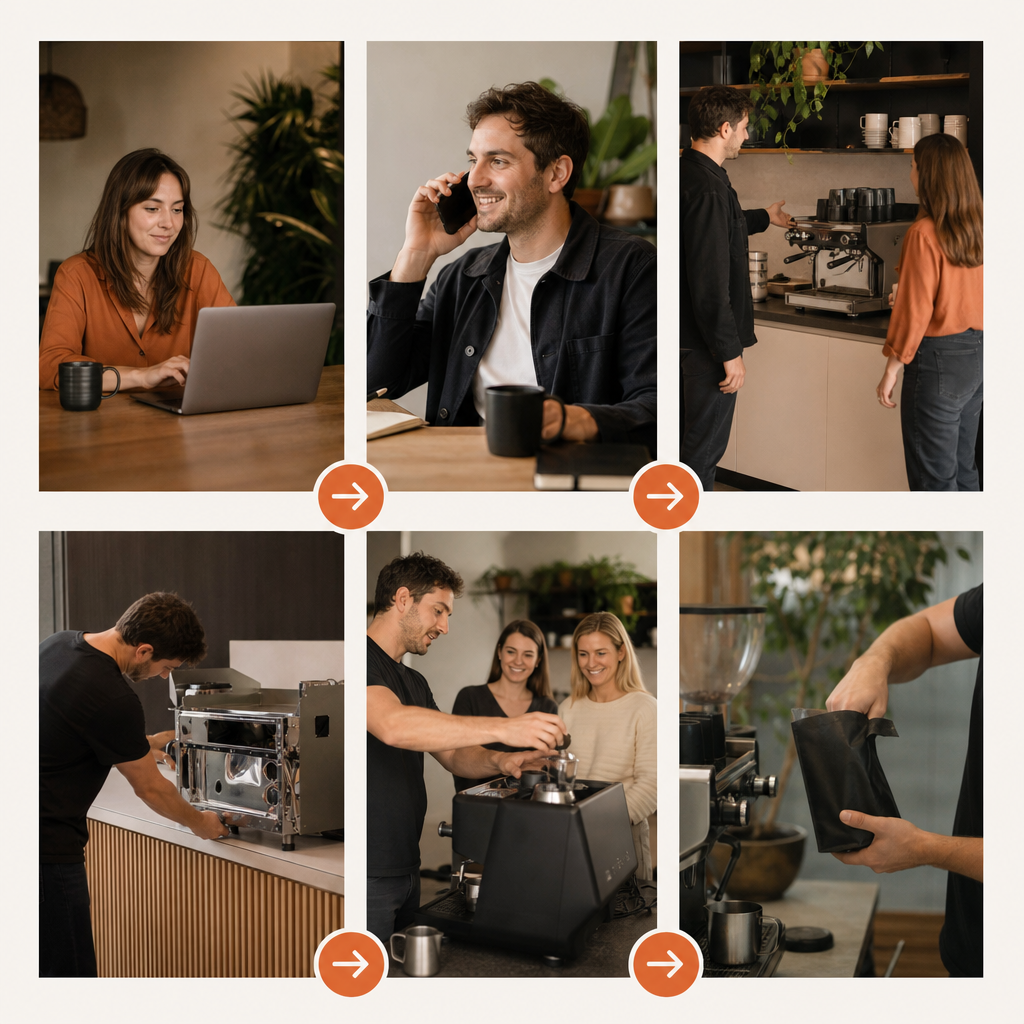
New clients follow Boutique Coffee's Six-Step Process, which moves from enquiry through to installation and ongoing supply. The process is designed to take most Melbourne clients from the first call to an installed machine in 5-7 business days, provided the site is ready and the required equipment is available.
Step 1: Enquiry
The initial enquiry takes about two minutes. We need the basic workplace details, including location, approximate team size, current coffee arrangement and the main reason for considering a change.
Step 2: Phone call with Chris
The initial call usually takes 15-20 minutes. We discuss drink preferences, daily demand, current problems and budget. I can then shortlist suitable machines and provide rough pricing without pretending that a final recommendation can be made blindly.
Step 3: On-site visit
The on-site assessment generally takes about 30 minutes. I inspect the proposed machine position, power, plumbing, drainage, bench space and access.
This is also where I check whether the original equipment idea makes sense. If a cheaper machine fits the team properly, I will recommend it. Upselling equipment that the workplace does not need creates higher costs and can make the coffee arrangement unnecessarily complicated.
Step 4: Installation
A standard installation is designed to take about 45 minutes once the site is ready. The machine is connected, the grinder is adjusted and coffee output is tested.
Installation time can change where access is restricted or site work remains incomplete. Those limitations should be identified during the assessment rather than discovered after the machine arrives.
Step 5: First brew and training
Training usually takes about 20 minutes. At least two staff members are shown how to use the machine, perform routine cleaning and recognise basic warning signs.
Training matters even with automatic equipment. The most capable commercial machine will still deliver inconsistent results if nobody understands milk-system care, cleaning cycles or basic operating prompts.
Step 6: Ongoing rhythm
After installation, the workplace moves into a weekly or fortnightly service rhythm. Beans and agreed consumables are replenished, the machine is monitored and feedback is used to refine the arrangement.
This is where a machine supplier either becomes useful or disappears. My position is clear: the ongoing relationship matters more than the installation photo.
What workplace and site conditions affect coverage?
A workplace must be safe, accessible and technically suitable for the proposed machine. Coverage can be affected by water access, drainage, power, bench capacity, security procedures, delivery restrictions and operating hours. We assess these conditions before confirming equipment because a good machine installed in the wrong location remains a bad recommendation.
Power, water and drainage
Different machines have different service requirements. Some need a suitable fixed water connection and drainage. Others may use internal tanks, depending on the model and expected demand.
We do not assume that an existing kitchenette is ready. The location and suitability of outlets, isolation points and drainage need to be checked. Any required regulated work should be completed by appropriately qualified people.
Bench space and working clearance
The footprint of the machine is only part of the requirement. Staff need room to refill beans, access cleaning components, handle milk and use the machine without creating congestion.
Cup storage, waste handling and grinder placement also matter. A machine squeezed into an unsuitable corner may be harder to clean and frustrating during the morning rush.
Building and loading access
Some Melbourne buildings require contractor registration, insurance documents, loading dock bookings or goods-lift reservations. Retail environments may restrict deliveries to certain times. Secure facilities may require escorts or advance identification.
These arrangements are manageable when disclosed early. They become a problem when a supplier promises installation without asking how equipment will enter the building.
Team size and peak demand
Headcount alone does not determine machine size. A hybrid office may have sharp attendance peaks. A showroom may serve customers as well as staff. A warehouse may have concentrated demand around shift changes.
We ask when coffee is made, not just how many names appear on the payroll. The correct machine must handle the busiest realistic period without forcing the client to pay for capacity that will never be used.
Why Melbourne-only coverage is a better service model
My view is that geographic coverage should stop where accountability becomes weak. A broad service map looks impressive, but it means little if the supplier relies on rotating contractors and distant support teams. Boutique Coffee remains Melbourne-only so the person making the recommendation can remain responsible for the result.
I'm not trying to be the biggest. I am trying to ensure that every accepted workplace can receive the level of service promised at the start.
This creates a useful test for coffee suppliers: ask whether their coverage represents ownership or merely availability. Can they sell into the area, or can they genuinely maintain the machine there?
The accountability radius
I think of practical coverage as an accountability radius. A site belongs inside that radius only when four things are true:
- The location can be assessed properly before installation.
- Deliveries can be maintained at the agreed rhythm.
- A service issue can receive a realistic response.
- The same responsible person can follow the relationship over time.
This is more useful than a long list of suburbs. It recognises that service coverage is not just distance. It combines travel, access, workload, machine knowledge and responsibility.
Boutique Coffee's supplied 2026 data records more than 200 active Melbourne workplace rental clients. The model works because the delivery promise and the support promise are managed together.
Long relationships expose weak coverage claims
The supplied active-client data records an average relationship length exceeding five years. Over that period, a workplace will usually experience staff changes, different consumption patterns, maintenance requirements and occasional equipment faults.
A supplier that can deliver the initial machine but cannot manage those changes does not have meaningful coverage. It has a sales territory.
At a mid-size Melbourne office, the existing coffee setup was not meeting staff expectations. I installed a WMF commercial machine, trained the team and provided ongoing service under the rental. Client Paul Bruno later reported easy daily use, strong coffee and hot chocolate quality, and service that remained consistent for years.
That long-term consistency is the point. Workplace coffee is not a one-off transaction. The coffee partner, not a supplier, must still be useful after the first month.
How can you confirm coverage for your workplace?
Send Boutique Coffee your full workplace address, team size, current coffee arrangement and any known access restrictions. We can then confirm whether the location is serviceable and arrange a direct discussion. Providing accurate details early leads to a better machine recommendation and fewer surprises during installation.
Useful information includes:
- the full street address and suburb
- approximate staff numbers
- expected office attendance patterns
- whether customers will also use the machine
- current machine type, if applicable
- common drink preferences
- known power, water or drainage details
- floor level and lift access
- parking or loading restrictions
- preferred installation timing
Photos of the proposed location can help with the initial discussion, but they do not always replace an on-site assessment. A photograph may not show electrical capacity, drainage conditions, access restrictions or the practical working clearance around the machine.
Do not worry if you do not know every technical detail. The purpose of the site visit is to check them. The important part is avoiding assumptions.
Check your workplace's serviceability
The fastest way to confirm coverage is to contact Boutique Coffee with your address, team size and current setup. Use the website contact page to start the conversation. You will speak directly with Chris about machine fit, likely pricing, site requirements and whether the location can be supported properly.
A good workplace coffee arrangement starts with an honest coverage check. If the site fits, we can plan the assessment and installation. If it does not, you will receive a direct answer rather than a promise passed to another service provider.
References
These external sources explain relevant Victorian installation responsibilities and the distinction between formal geographic definitions and practical service boundaries. Boutique Coffee's client counts, relationship length, response time and operating details cited above come from the author's business data supplied for this article in 2026.
- Australian Bureau of Statistics, Geography: https://www.abs.gov.au/geography
- Victorian Building Authority, Consumer information: https://www.vba.vic.gov.au/consumers
- Energy Safe Victoria, Consumer electrical and gas safety information: https://www.energysafe.vic.gov.au/consumers
Frequently asked questions
What areas of Melbourne does Boutique Coffee service?
Boutique Coffee services workplaces across Melbourne, subject to address confirmation and practical serviceability. The actual location, access conditions and installation requirements are assessed before a service commitment is made.
Does service coverage include coffee bean delivery?
Yes. Ongoing arrangements can include fresh coffee beans and agreed consumables, together with machine servicing and support. Delivery frequency is planned around workplace consumption, machine use and storage.
How quickly can someone attend if our coffee machine stops working?
Boutique Coffee's supplied 2026 client records show a typical response time of 24 hours. Same-day or next-day attendance may be possible depending on scheduling, travel, access, fault complexity and parts availability.
Can Boutique Coffee install a machine in a high-rise office or secure building?
Potentially, yes. Loading access, goods lifts, contractor induction, parking, security procedures and permitted work times must be confirmed before installation.
Are regional Victorian workplaces covered?
Boutique Coffee focuses on Melbourne and does not promise general regional Victorian coverage. Locations outside the normal area can be assessed individually, but service will only be offered where dependable support is practical.
Is there a long-term contract for machine rental?
No. Boutique Coffee rentals are month-to-month, with one month's notice to exit and free machine pickup.
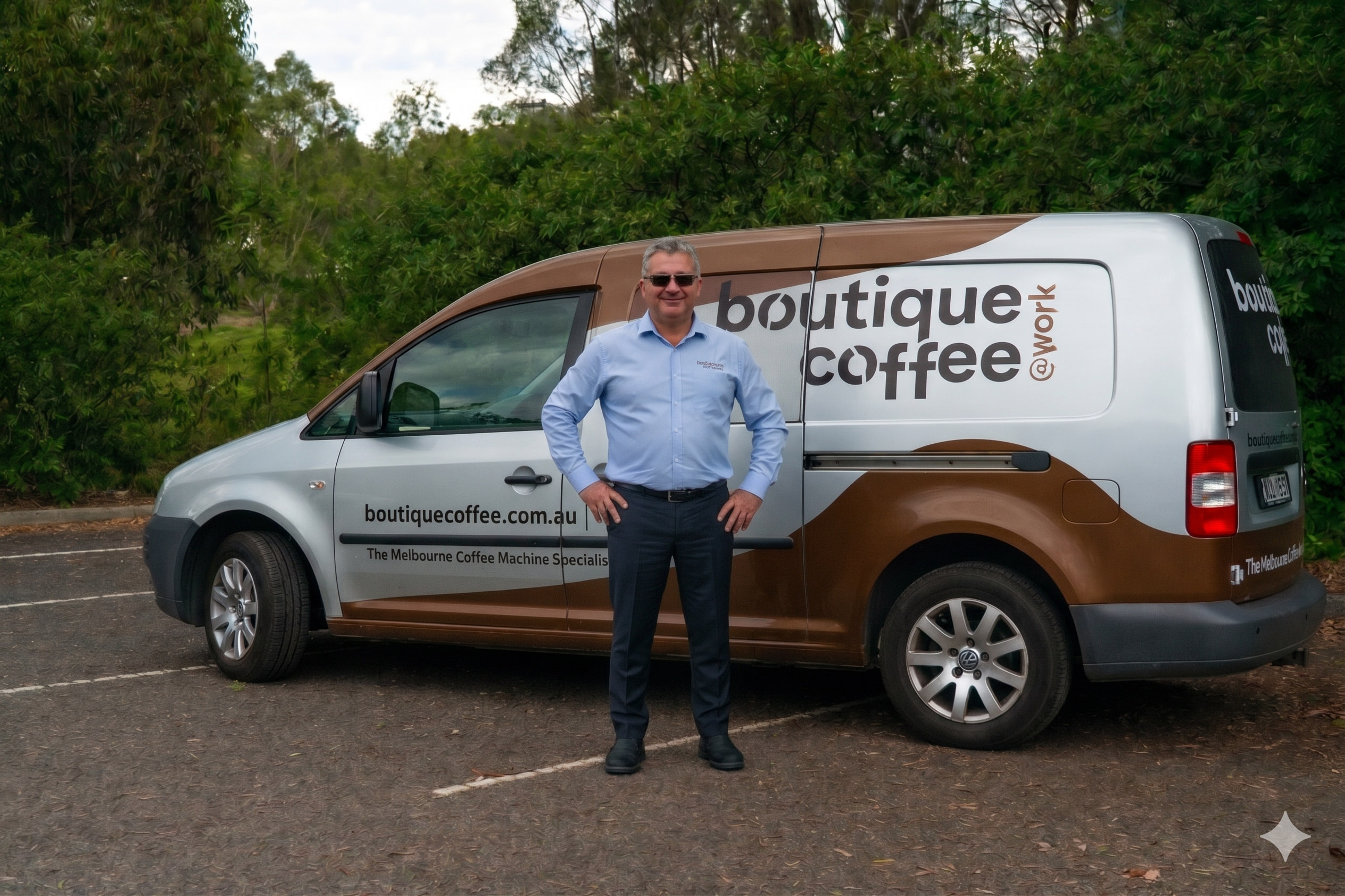
Chris
Chris
Keep reading
Essential Features of a Commercial Office Coffee Machine: What to Look For in Australia
The essential office coffee machine features are consistent drink quality, useful beverage customisation, a practical milk system, sufficient peak-hour…
How to Choose an Office Coffee Machine: A Step-by-Step Guide for Australian Businesses
To choose an office coffee machine, assess daily drink demand, peak usage, preferred drinks, available space, plumbing and staff expectations. Then compare…
The Real Cost of Commercial Coffee Machine Cleaning & Maintenance in Australia
Coffee machine cleaning cost depends on the machine, usage, water quality, labour, replacement parts and service arrangement. Owners pay these expenses…