
Company credentials and commercial coffee experience should prove that a provider can select, install, supply and maintain the right workplace coffee system over time. Look for an established operating history, relevant equipment capability, dependable service processes, transparent rental terms, staff training, quality controls and one accountable contact who owns the result.
Commercial coffee credentials are not a logo wall or a polished capability statement. They are evidence that your provider understands equipment, beans, workplace demand and the operational cost of a machine failing when everyone wants coffee.
At Boutique Coffee, my focus has been workplace coffee since 2008. This guide explains what credible experience looks like, which questions expose weak suppliers and how our model works across Melbourne.
Key takeaways
Strong commercial coffee credentials combine legal identity, relevant operating history, technical competence and a service model that works after installation. Buyers should examine how the provider sizes machines, handles faults, manages coffee quality and retains clients, rather than relying on brand recognition or sales claims alone.
- Verify the business through independent registers before evaluating its marketing.
- Match equipment to actual workplace demand, not the highest available specification.
- Ask who remains accountable when the machine, grinder or supply process fails.
- Treat installation, training, maintenance and bean quality as one operating system.
- Prefer transparent rental terms and long-term relationships retained by service.
- Examine response procedures, not vague promises of support.
Summary table
A useful credentials review connects every sales claim to practical evidence. The table below separates surface-level assurances from the proof that matters in a workplace. It also shows why commercial experience must cover the complete coffee service, rather than the machine or beans in isolation.
| Credential area | Weak evidence | Strong evidence | Why it matters |
|---|---|---|---|
| Business identity | Logo and website | Verifiable registration and contact details | Confirms who is responsible |
| Commercial experience | General hospitality claims | Relevant workplace installations and ongoing relationships | Office demand differs from domestic use |
| Equipment advice | Product catalogue | Site assessment and demand-based recommendation | Prevents under-sizing and unnecessary spending |
| Installation | Delivery only | Plumbing, power and bench checks followed by testing | Reduces avoidable operating problems |
| Technical support | Generic helpdesk | Direct contact with a person who knows the site | Speeds diagnosis and action |
| Coffee quality | One blend for every workplace | Bean matching, grinder calibration and feedback | Improves consistency and staff acceptance |
| Rental terms | Long commitment and difficult exit | Clear inclusions, notice terms and collection process | Keeps the provider accountable |
| Training | Quick demonstration | Practical first-brew training and written guidance | Reduces user errors and poor coffee |
What company credentials should a commercial coffee provider prove?
A credible commercial coffee provider should prove its legal identity, operating history, equipment knowledge, technical support capability and responsibility for ongoing supply. These credentials should be independently verifiable where possible. They must also be relevant to workplace coffee, because general hospitality experience does not automatically establish competence in office systems.
Start with the basics. Search the provider through the Australian Government's ABN Lookup and, where relevant, the ASIC company registers. Check that the business name, entity and contact details align with the proposal and invoice.
Registration is only the entry point. It confirms that an entity exists, not that it can maintain a commercial coffee service. Ask for evidence covering:
- How long the provider has focused on commercial or workplace coffee.
- Which machine categories it installs and supports.
- How it assesses team size, peak demand, plumbing and available power.
- Who performs installation, grinder calibration and staff training.
- What maintenance is included and how faults are reported.
- Whether consumables are monitored or merely dispatched when requested.
- How rental exits, machine collection and final charges work.
Training credentials can add useful evidence of coffee knowledge. The Specialty Coffee Association's education programmes, for example, cover recognised coffee skills and learning pathways. However, a certificate does not prove that a provider will answer your call, carry appropriate parts or understand your machine's history.
Insurance details, written service inclusions and equipment ownership should also be available before signing. If the supplier avoids straightforward questions about responsibility, exclusions or response procedures, treat that as a warning.
Why does commercial coffee experience matter?
Commercial coffee experience matters because workplace systems face concentrated demand, varied user behaviour and little tolerance for downtime. An experienced provider understands that equipment capacity, grinder settings, milk-based drink volume, cleaning habits and service access are connected. A mistake in any one area can undermine the entire workplace coffee arrangement.
A home machine can appear economical until a busy office overwhelms it. My rule is direct: a 12-person team does not need a $15,000 Eversys, while an 80-person team can break a home-grade Jura within a month. The right recommendation sits between under-sizing and needless specification.
That judgement comes from examining the workplace rather than selecting from a brochure. I want to know:
- How many people regularly use the machine.
- Whether demand arrives steadily or in sharp peaks.
- How many drinks are milk-based.
- Whether customers also use the machine.
- Who will clean and refill it.
- Whether plumbing, drainage, power and bench space are suitable.
- How quickly the team needs support when something stops working.
Boutique Coffee's own 2026 business records show more than 200 active Melbourne workplace rental clients, with an average active-client relationship exceeding five years. The largest single workplace installation serves a team of more than 400 people. Those figures reflect ongoing operating exposure, not machines delivered and forgotten.
Experience also becomes visible when something goes wrong. At a busy Melbourne workplace, machine outages had caused disruption during peak office hours. I introduced scheduled servicing and remained the direct contact for issues. The client's feedback was simple: reliable maintenance meant the team had coffee when it was needed, without the havoc previously caused by breakdowns.
How do Boutique Coffee's credentials translate into delivery?

Boutique Coffee turns experience into a repeatable Six-Step Process covering enquiry, recommendation, site assessment, installation, training and ongoing service. It is designed to move suitable Melbourne workplaces from first contact to an operating commercial machine within 5 to 7 business days, while checking the practical details before equipment arrives.
The process works as follows:
Enquiry
The client submits basic workplace and team details. Boutique Coffee's process allows about 2 minutes for this initial step. The aim is to establish whether the service is broadly suitable before asking for unnecessary information.
Phone call with Chris
I discuss the workplace, coffee preferences, existing setup and likely machine category. This conversation usually takes 15 to 20 minutes under our internal process. The client receives a shortlist and rough pricing rather than an oversized catalogue.
On-site visit
A 30-minute site assessment checks power, plumbing, drainage, bench space and service access. It also tests assumptions made during the phone call. This step prevents a machine being chosen without understanding where and how it will operate.
Install day
Installation is allocated about 45 minutes when the site is ready. The machine is connected, the grinder is dialled in and the coffee is tested. Where site changes require qualified trades, those requirements should be identified before installation rather than improvised on the day.
First brew and training
At least two staff members receive practical training during a 20-minute session. A cheat sheet remains at the workplace. Training covers drink preparation, refilling and routine care, because many apparent equipment faults are avoidable setup or cleaning issues.
Ongoing rhythm
Service visits occur weekly or fortnightly according to the workplace's requirements. Beans and relevant consumables are topped up, and the machine's operation is checked. This closes the gap between selling a machine and remaining responsible for the coffee experience.
The timings above come from Boutique Coffee's own operating process. Complex sites can require additional preparation. I would rather identify that early than promise an installation date that ignores plumbing, electrical or access constraints.
What should commercial coffee equipment and technical support include?
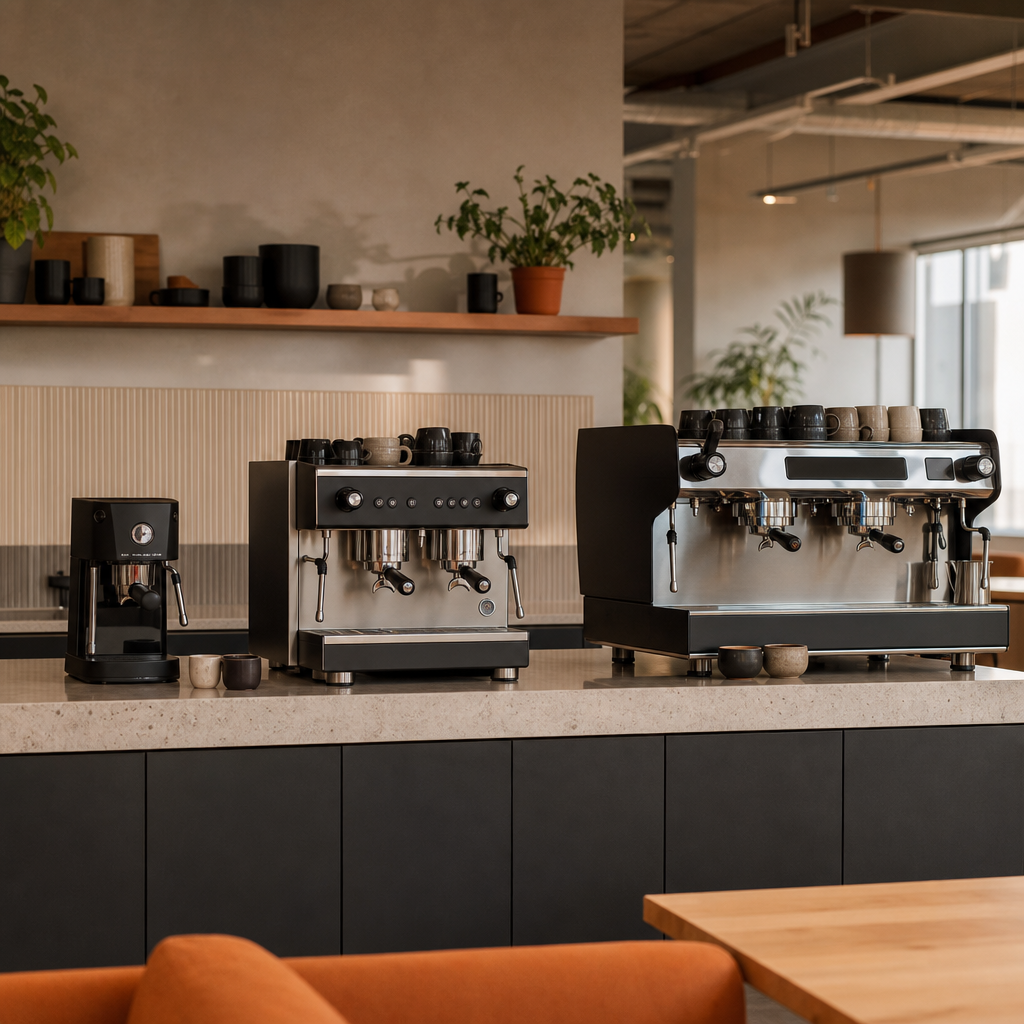
Commercial coffee support should include demand-based equipment selection, site checks, professional installation, grinder calibration, user training, preventive maintenance and a clear fault-response process. Equipment and support cannot be separated. A capable machine will still produce poor results if it is badly installed, incorrectly adjusted or left without practical maintenance.
A proposal should state what is included in the rental and what attracts an additional charge. Clarify responsibility for the machine, grinder, water filtration, cleaning products, replacement parts, labour and collection at the end of the arrangement.
Workplace buyers should also ask how faults are triaged. Many suppliers advertise a support team, but the client enters a ticket queue and repeats the problem to several people. My position is different: one number, one person. I stay accountable from the site visit through ongoing service.
Most straightforward issues can be diagnosed quickly when the person answering already knows the machine and workplace. If an on-site visit is required, Boutique Coffee's 2026 service records show a typical response time of 24 hours across the active client base. Actual timing can still depend on location, access, parts and the nature of the fault.
Maintenance should be preventive, not merely reactive. A useful service visit can include:
- Checking coffee extraction and grinder settings.
- Inspecting visible wear, leaks and unusual machine behaviour.
- Confirming cleaning routines are being followed.
- Reviewing bean and consumable levels.
- Asking users whether drink quality or operation has changed.
- Recording issues that may require follow-up.
Coffee equipment is workplace plant, so installation and use should also account for foreseeable risks. Safe Work Australia's plant guidance provides a useful starting point for understanding broader duties around workplace equipment. Providers should not perform electrical or plumbing work outside their competence or licensing.
How should roasting, bean supply, training and quality assurance work?
Bean supply and quality assurance should be matched to the workplace's preferred drinks, machine and grinder rather than treated as a generic consumables order. A competent provider establishes a suitable blend, calibrates it during installation, gathers feedback and adjusts supply before small quality problems become permanent dissatisfaction.
Boutique Coffee uses a Curated Coffee Plan during onboarding and whenever a workplace wants to reconsider its beans. I first ask whether the team prefers espresso or milk-based drinks, how strong they like coffee and which flavours they dislike. A well-matched blend is then selected and reviewed through feedback during the first month.
This matters because the same coffee can perform differently when grind, dose, extraction and milk ratio change. A roast that works as espresso may taste muted in a large milk drink. Strong beans cannot compensate for stale supply, poor calibration or neglected cleaning.
Quality assurance should therefore cover the complete chain:
- Bean selection and supply rotation.
- Appropriate storage at the workplace.
- Grinder calibration.
- Shot testing during installation and service.
- Machine cleaning and water management.
- Staff feedback about taste and ease of use.
- Adjustment when workplace preferences change.
Some commercial coffee companies promote roasting, contract manufacturing and wholesale scale as their central credentials. Those capabilities matter when a buyer needs private-label products or complex distribution. They are not automatically the most relevant proof for a Melbourne office renting a machine.
For workplace coffee, I prioritise whether the beans are chosen on purpose, whether the grinder is dialled in and whether somebody remains responsible for the cup. Café-quality, made practical, requires control at the point of use rather than a long list of upstream capabilities.
Multi-site organisations should ask how stock, service records and machine standards will be managed across locations. They should also establish whether local response capacity exists. A national phone number does not necessarily mean a technician or decision-maker is nearby.
What should businesses check before choosing a coffee partner?
Before choosing a commercial coffee provider, businesses should test its claims against a real workplace scenario. Give the provider your team size, peak demand, preferred drinks, site constraints and service expectations. Then assess whether the recommendation is specific, technically credible, transparent about costs and supported by a named accountable person.
Use these questions during procurement:
How did you choose this machine?
The answer should connect capacity and features to actual use. Be cautious if every workplace is directed towards the same machine or the most expensive available model.
What happens after I report a fault?
Ask who answers, who decides the next action and whether you must enter a ticket system. Request realistic information about remote troubleshooting, site attendance and parts availability.
What is excluded from the rental?
Check beans, filters, cleaning products, labour, parts, servicing and collection. Read the written terms rather than relying on phrases such as fully managed.
Can I leave if the service is not right?
Boutique Coffee rentals are month-to-month, with one month's notice to exit and free machine pickup. These are Boutique Coffee's own rental terms, not an industry-wide standard. Compare notice requirements, collection costs and final payment obligations across providers.
Who trains new users later?
Initial training is useful, but staff change. Ask whether refresher help, written guidance or practical troubleshooting remains available.
Can you explain a situation where you would not recommend your service?
This question tests integrity. I will refer a prospect elsewhere if the fit is wrong. A coffee partner, not a supplier, should be prepared to recommend a cheaper machine or no deal at all.
Before accepting any rental agreement, examine the written terms carefully. The ACCC's guidance on buying products and services explains consumer guarantees, although protections and remedies can depend on the buyer, product, price and circumstances. Businesses should obtain advice where contractual obligations are unclear.
The strongest commercial credential is voluntary retention
The best evidence of commercial coffee capability is not the length of a rental contract. It is whether clients remain when they are free to leave. My contrarian position is that no lock-in creates better discipline: the machine, coffee and service must continue earning the relationship after installation.
Boutique Coffee has operated exclusively in this field for 17 years, according to the business's 2026 profile. Across the active client base, the average relationship exceeds five years. Every rental remains month-to-month, with one month's notice and free pickup.
That model has never cost me a client worth keeping. A long-term client retained by choice is more valuable than one retained by contract. It also makes weak service impossible to hide behind paperwork.
I saw the value of reputation in a Melbourne retail environment. While attending a client's site, I met somebody who had previously worked at another client workplace. He had come to ask for my card because the coffee at his new employer was poor and he wanted senior management to discuss a replacement arrangement.
That interaction did not come from a sales sequence. It came from someone remembering consistent coffee and direct service. Company credentials become credible when former users carry the experience into another workplace.
This is also why I remain founder-led, always. I'm not trying to be the biggest. I want to know each setup, make honest equipment recommendations and ensure your team never goes without coffee because nobody owns the problem.
Is Boutique Coffee right for your workplace?
Boutique Coffee is suited to Melbourne workplaces that want a properly selected commercial machine, ongoing bean supply, regular servicing and direct founder accountability. It may not suit businesses seeking an unmanaged equipment purchase, private-label contract manufacturing or a provider built around national helpdesk infrastructure rather than local personal service.
A useful first conversation covers team size, location, drink preferences, existing equipment and available services. From there, I can explain whether a commercial rental makes sense, which machine category fits and what the ongoing arrangement would include.
There is no benefit in forcing the wrong fit. A smaller workplace may need a simpler option. A high-volume office may require more capacity and a different service rhythm. The recommendation should be designed around your culture and budget.
To discuss your workplace, visit Boutique Coffee's /contact page. You will speak directly with the person responsible for assessing, installing and supporting the system, with no call centres and no corporate runaround.
References
These references provide independent starting points for checking business identity, coffee education, workplace equipment responsibilities and purchasing protections. They do not endorse Boutique Coffee or replace professional advice. Provider-specific operating figures and service terms in this article come from Boutique Coffee's own business records and profile supplied for 2026.
- Australian Business Register, ABN Lookup
- Australian Securities and Investments Commission, Company information and registers
- Australian Competition and Consumer Commission, Consumer rights and guarantees
- Safe Work Australia, Plant, equipment and structures
- Specialty Coffee Association, Coffee education
Frequently asked questions
How can I verify a commercial coffee company's credentials?
Check its ABN and business details through ABN Lookup and relevant ASIC registers. Then request evidence of workplace installations, equipment capability, maintenance processes, insurance, rental inclusions and fault handling.
How much commercial coffee experience should a provider have?
There is no single minimum that guarantees competence. Examine whether the experience is relevant to workplaces of your size and includes installation, training, maintenance and supply. Boutique Coffee's 2026 business profile records 17 years focused exclusively on Melbourne workplace coffee.
What should be included with a commercial coffee machine rental?
A managed rental can include equipment selection, site assessment, installation, grinder calibration, initial training, scheduled servicing and ongoing coffee supply. Confirm responsibility for filters, cleaning products, parts, labour, consumables and collection in writing.
Should I accept a long-term coffee machine contract?
Only accept a long-term contract when its value, obligations and exit costs are clear. Boutique Coffee rentals are month-to-month, require one month's notice to exit and include free machine pickup.
How quickly should a workplace coffee machine be repaired?
Ask how diagnosis, technician availability, parts and site access affect timing. Boutique Coffee's 2026 service records show a typical response time of 24 hours across its active Melbourne client base.
Can Boutique Coffee support a large workplace?
Yes, subject to a site and demand assessment. Boutique Coffee's own business records include a single workplace installation serving more than 400 people.
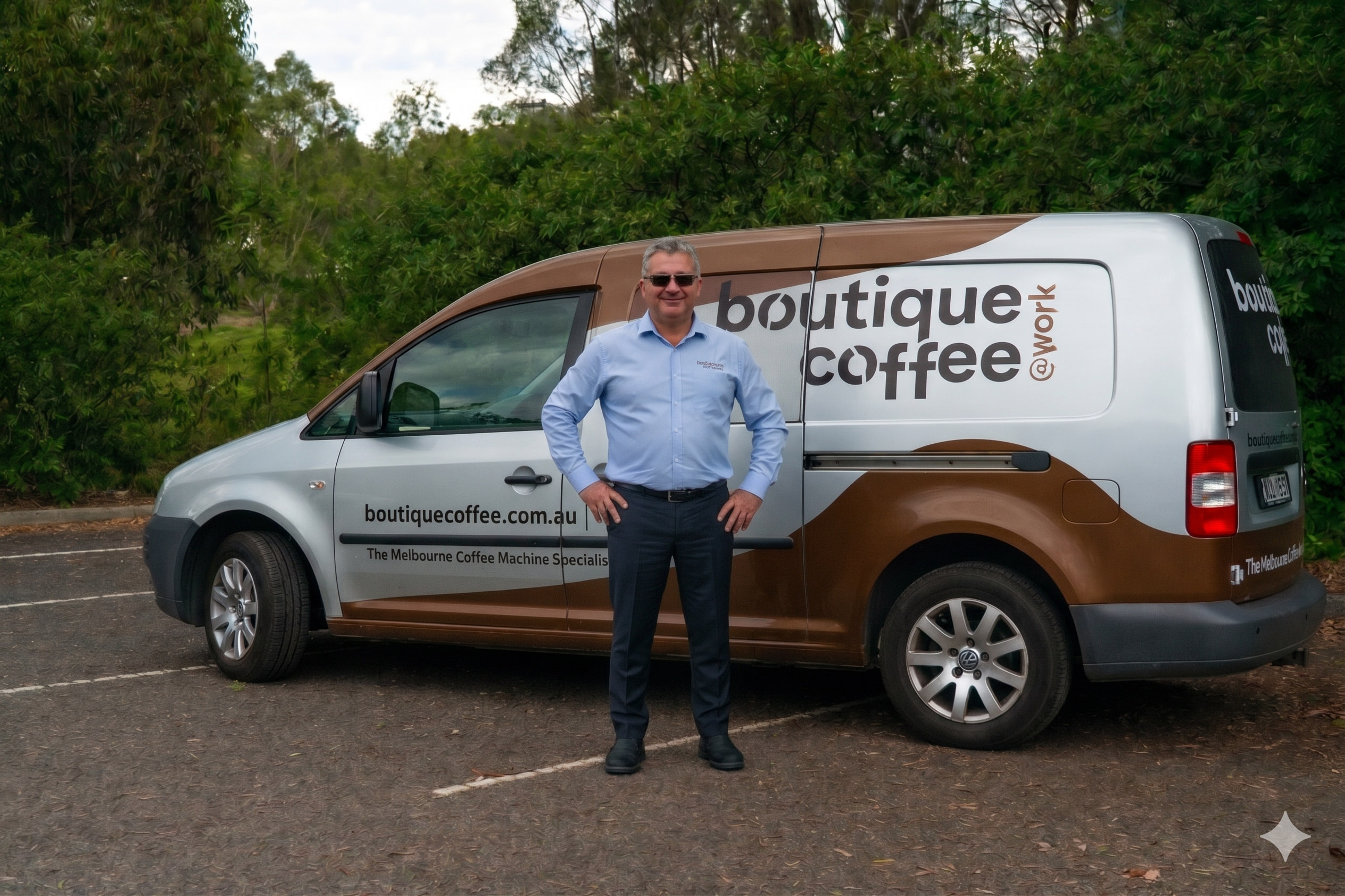
Chris
Chris
Keep reading
Types of Office Coffee Machines: Finding the Right System for Your Australian Business
Office coffee machine types fall into four main categories: automatic bean-to-cup, traditional espresso, filter or batch brew, and pod or capsule systems. The…
Office Coffee Subscriptions vs Machine Rental: Which is Better?
An office coffee subscription is better when you already own suitable equipment and only need fresh beans delivered. Machine rental suits offices needing…
Office Coffee Machine Rental FAQs: Straight Answers for Melbourne Workplaces
Office coffee machine rental means paying a monthly fee to use a commercial machine that the supplier installs, services and looks after, rather than buying it…