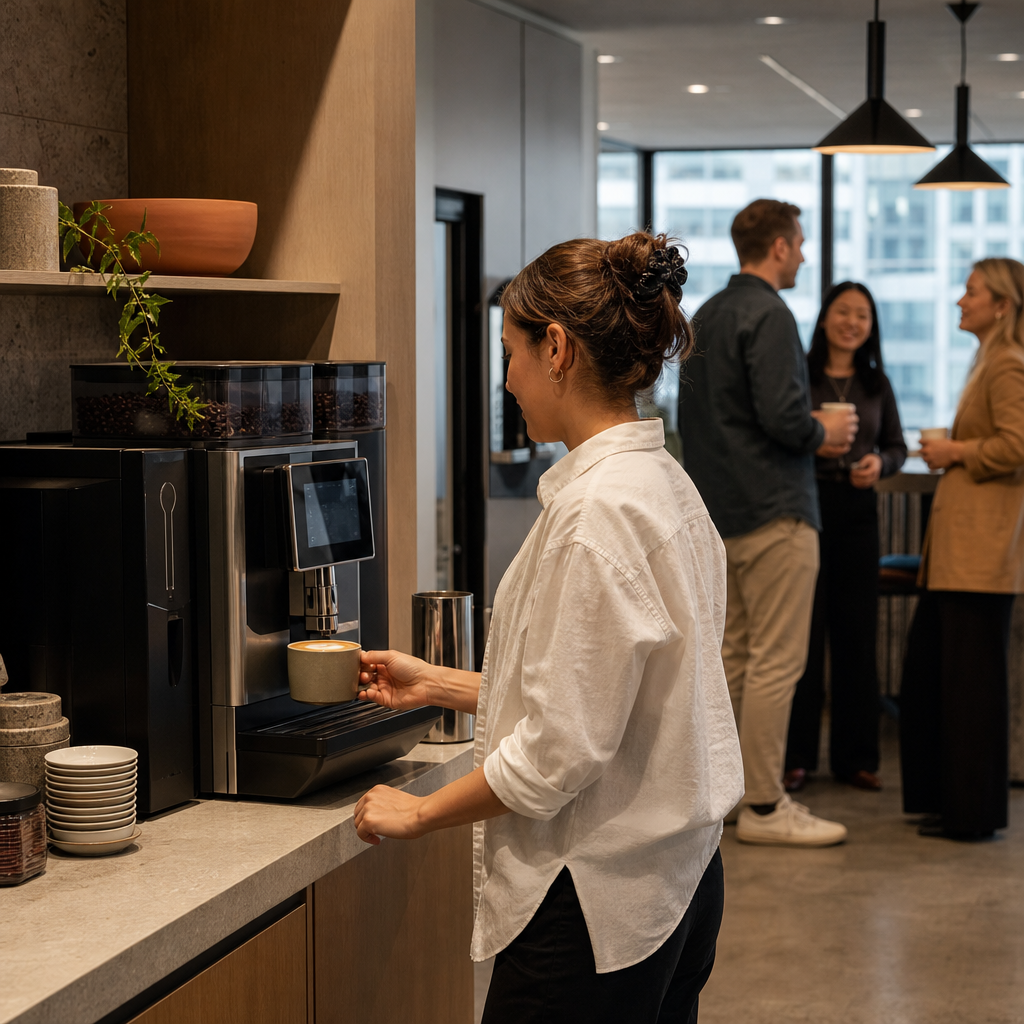
Office coffee machine rental in Melbourne is priced as a monthly fee driven mainly by headcount, daily cup volume, machine type, milk system and site setup. At Boutique Coffee at Work, the plan includes the machine, installation, servicing and training, runs month-to-month with one month's notice, and your quote is confirmed after a short call.
Most Melbourne office managers can't get a straight answer on rental pricing without sitting through a sales call. That is frustrating when all you want is a realistic budget to take to your finance team. I'm Chris Prokopiou, and I've run Boutique Coffee at Work since 2008. In that time I've learned that opaque pricing is usually a sign of a business model that depends on you not asking questions.
This article explains how our rental plans are structured, what moves the monthly figure up or down, what is included and what isn't, and how to compare quotes fairly. You'll arrive at a quote conversation already informed.
Key Takeaways
- Rental pricing is driven by five things: headcount and cups per day, machine type, milk system, plumbing and site conditions, and number of sites.
- A fair plan names every component: machine, installation, servicing, training, and how beans and milk are supplied.
- Our plans are month-to-month with one month's notice and free machine pickup, so you are never paying for a machine that no longer fits.
- Service calls are answered by one person on one number, with a typical response within 24 hours, included in the plan.
- The right machine is the one that fits your actual team size, not the most expensive one on the price list.
- When comparing quotes, ask what is excluded as well as what is included, and what exiting costs.
Rental Pricing at a Glance
The table below summarises the main pricing elements and where each one shows up in a quote. It is deliberately qualitative. Exact figures are confirmed in writing after a conversation about your team.
| Pricing element | What it affects | Where you see it |
|---|---|---|
| Headcount and daily cups | Machine capacity and supply volume | Machine recommendation and ongoing supply |
| Machine type | Rental fee and servicing needs | Monthly rental line |
| Milk system | Cleaning demands and machine complexity | Machine choice and service schedule |
| Plumbing and site setup | Install scope | Site visit findings |
| Number of sites | Coordination and delivery | Per-site assessment, one point of contact |
| Terms | Your flexibility and risk | Notice period and exit conditions |
Why Does Coffee Machine Pricing Feel So Opaque?
Coffee machine pricing feels opaque because many suppliers bundle machine, beans and service into one figure, tie you to multi-year terms, and add fees that only appear on the invoice. You can't compare quotes when each one hides different costs. A transparent plan names every component and makes exiting simple.
Three patterns create most of the confusion.
Lock-in leases. A multi-year agreement can make the monthly figure look low. The catch is that you keep paying if the machine doesn't suit your team, if headcount changes, or if the service falls away. The risk sits with you, not the supplier.
Bundled consumables. When machine, beans and milk are rolled into one number, you can't see what you are paying for the machine and what you are paying for the coffee. A cheap machine with expensive beans can cost more over a year than a pricier machine with fair supply. You just can't tell from the quote.
Surprise service fees. Call-out charges, after-hours loadings and parts costs are often outside the headline price. Then there is the routing problem: helpdesks, ticket systems and tiered support teams that turn a two-minute fix into a three-day wait.
I have published separate pieces on the daily cost of running a commercial coffee machine in an Australian office, and on lease versus month-to-month rental. I won't repeat that maths here. This article focuses on what a quote should contain and what moves the number.
One more point of protection. The ACCC publishes guidance on unfair contract terms, and those protections extend to many small business standard form contracts. If you are signing anything with an auto-renewal clause or heavy exit fees, read it with that guidance open.
How Is a Boutique Coffee Rental Plan Structured?
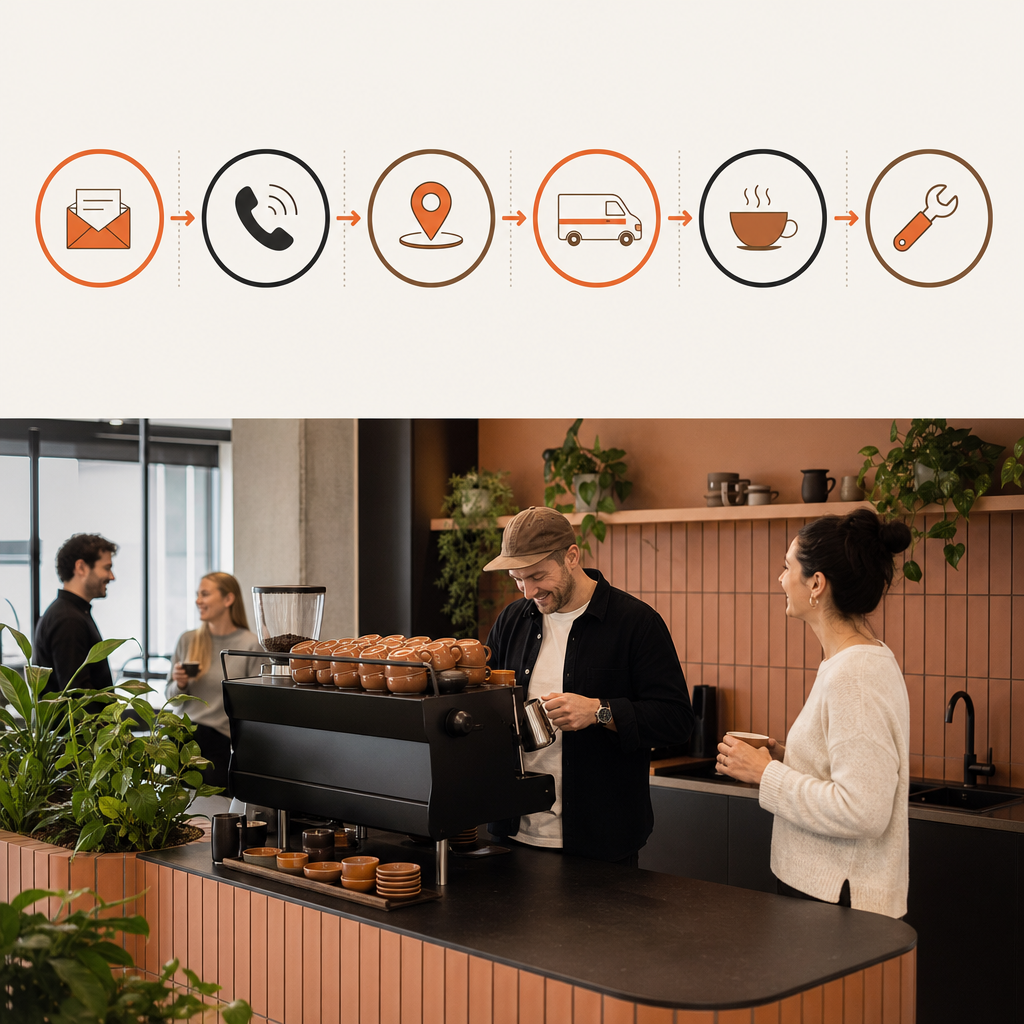
A Boutique Coffee rental plan covers a commercial machine, professional installation, staff training, scheduled servicing and an ongoing supply of beans and milk, all under one month-to-month agreement. One person manages it from the first call, on a single phone number, so you never chase a helpdesk.
I run every new client through what I call The Six-Step Process. It takes most Melbourne clients from first call to an installed machine in 5-7 business days.
- Enquiry. You submit basic team details. It takes about two minutes.
- Phone call with me. Fifteen to 20 minutes. We shortlist machines and talk through rough pricing.
- On-site visit. About 30 minutes. I assess power, plumbing and bench space.
- Install day. About 45 minutes. The machine is connected, the grinder is dialled in and shots are tested.
- First brew and training. About 20 minutes. At least two of your staff are trained and a cheat sheet is left on site.
- Ongoing rhythm. Weekly or fortnightly service visits, with beans and consumables topped up.
Pricing is discussed at step two, not step six. By the end of that call you have a machine shortlist and a rough figure, and the site visit confirms whether anything changes it.
How beans and milk fit in
Beans are matched using what I call the Curated Coffee Plan. I ask about your team's drink preferences (espresso versus milk-based, strength, any dislikes), start you on a well-matched blend, then adjust based on team feedback within the first month. It means you get dialled-in beans chosen on purpose, rather than a one-size supply that half the office quietly dislikes.
How beans and milk are charged (per kilo, per delivery or otherwise) is set out in your written quote. [CLIENT TO CONFIRM: consumables pricing basis and delivery frequency.]
What one accountable person looks like
There are no call centres and no corporate runaround. The person who visits your site is the person who answers your call. Most faults can be talked through in two minutes when the person on the phone already knows your setup. That is also why a service response within a day is realistic: there is no internal queue to get through first.
Here is a real example from my own rounds. A mid-size Melbourne office was running a coffee setup that wasn't meeting the team's expectations. I upgraded them to a WMF commercial machine, with full install, training and ongoing service included in the rental. The change was noticeable across the whole office. The site manager told me the machine was easy to use every day, the coffee and hot chocolate were great, and service has stayed consistent for years.
What Changes the Price of an Office Coffee Machine Rental?
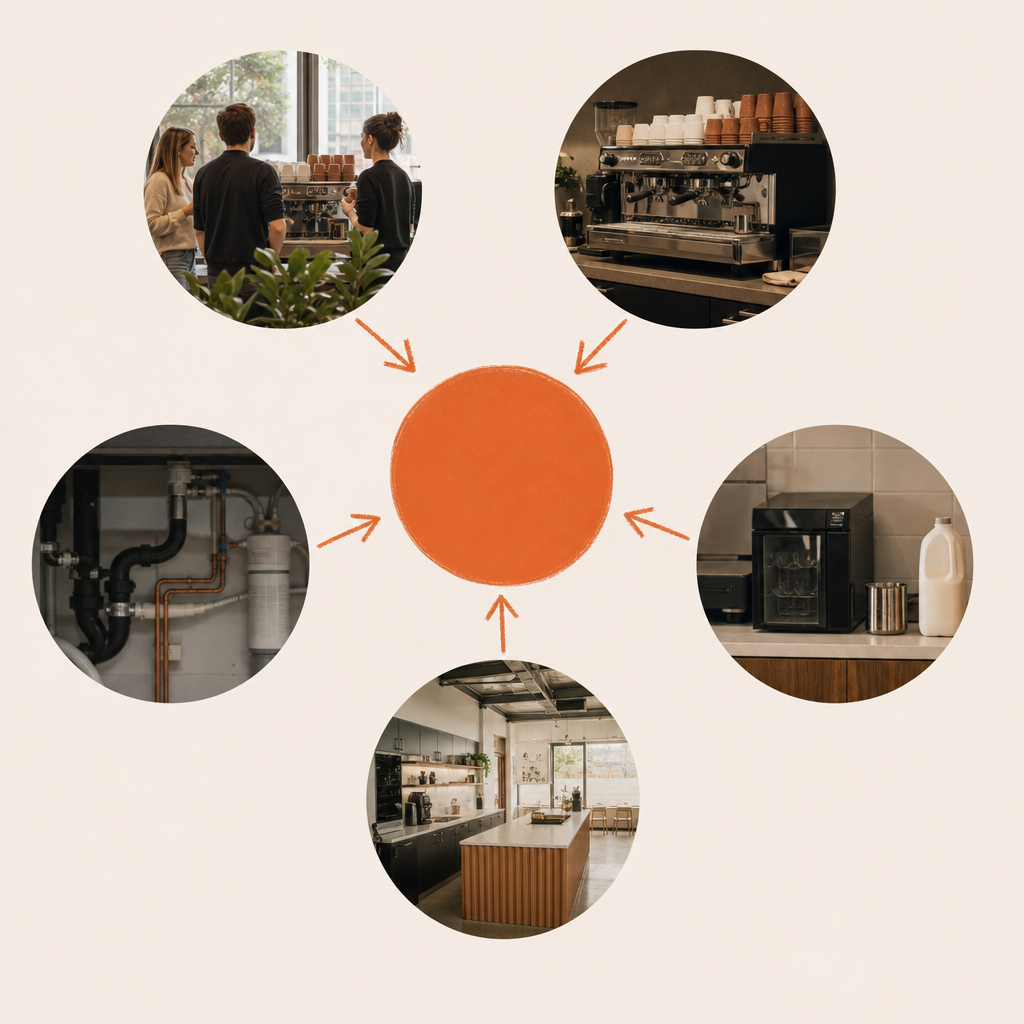
Five factors move the monthly figure: how many people drink coffee and how many cups they have per day, the machine type, whether you want fresh milk, the plumbing and site conditions, and how many sites you have. Headcount and cup volume matter most because they decide which machine can cope.
Headcount and cups per day
This is the starting point for every quote. Headcount alone is a blunt instrument. A 40-person team that drinks two coffees each before lunch puts far more load on a machine than a 40-person team where half are remote on any given day. I ask about real patterns: peak times, meeting-room demand, visitors, and whether hot chocolate and tea are in the mix.
The load decides the machine. My experience is that fit matters more than specification. A 12-person team doesn't need a $15,000 Eversys. An 80-person team will break a home-grade Jura within a month. I recommend the machine that fits your team's actual size, even when that is the cheaper option. An inflated first invoice isn't worth losing a client I'd like to keep for years.
At the top end, I have installed across a single client with a team of more than 400 people. At that scale you are looking at higher-capacity equipment and often more than one point of service, so the plan looks quite different from a 15-person office.
Machine type
Machine type sets the rental fee and the servicing profile. In broad terms:
- Fully automatic bean-to-cup commercial machines suit most offices. Staff press a button, the machine grinds, tamps and extracts. Training takes minutes.
- Higher-capacity commercial machines suit larger teams with sustained peak demand.
- Traditional espresso machines can produce excellent coffee but need a trained operator, which most offices don't have.
- Pod systems are convenient but give you less control over the beans, and they sit outside what I install.
The machine is also a service commitment. A more complex machine needs more attention, so the right choice is the simplest one that handles your volume.
Milk systems
Milk is where a lot of the complexity hides. Fresh milk drinks such as flat whites and lattes are what most café-trained staff expect, and a fresh-milk system needs regular cleaning to stay safe and taste right. That affects the machine choice and the service schedule. If your team is mostly black coffee and a few milky drinks, a simpler setup may be all you need. If most drinks are milk-based, we plan the system around that from day one.
Plumbing and site conditions
The 30-minute site visit exists to settle this. I check power, water access and bench space. A site with a tap and a drain close to the bench is straightforward. A site that needs new plumbing work is different. In Victoria, plumbing work is regulated by the Victorian Building Authority, so connection work beyond a simple existing outlet needs a licensed plumber. Anything outside our standard install is identified at the visit and quoted in writing before you commit. [CLIENT TO CONFIRM: how plumbing extras are handled and charged.]
Number of sites
If you run more than one office in Melbourne, each site is assessed on its own. A head office with 90 staff and a satellite with 15 need different machines. What stays the same is the contact: one person and one number across all sites. We are Melbourne-only, so check our service coverage and delivery areas before assuming we reach a site outside the metro area.
What's Included in the Rental and What's Extra?
The standard rental includes the machine, installation, staff training, scheduled servicing, a service call response typically within 24 hours, and free pickup when you leave. Beans and milk are supplied on an ongoing basis and quoted separately. Extras are limited to site-specific work, identified at the site visit.
The table below shows how I think about it.
| Item | Included in the plan | Confirm at quote |
|---|---|---|
| Commercial machine | Yes | Model matched to your team |
| Installation | Yes, on install day | Any site-specific work |
| Staff training and cheat sheet | Yes | Not applicable |
| Scheduled servicing | Yes, weekly or fortnightly rhythm | Visit frequency for your site |
| Service calls | Yes, typical response within a day | Not applicable |
| Beans and milk | Supplied on an ongoing basis | Pricing basis and delivery rhythm |
| Machine pickup on exit | Free | Not applicable |
| New plumbing or power work | Not standard | Quoted before you commit |
Installation
Installation is part of the plan, not a separate fee. On install day the machine is connected, the grinder is dialled in and shots are tested before I leave. The training session straight afterwards means at least two of your staff can run, clean and troubleshoot the machine. Our Melbourne-specific installation guide goes into the practical detail, including bench space and power requirements.
Servicing and response
Servicing is included. That means scheduled visits on a weekly or fortnightly rhythm, plus the call-out when something goes wrong. Across our active client base, the typical response to a service call is 24 hours. Machines break at the worst moment, usually during peak hours. One Melbourne workplace I look after used to suffer real disruption whenever their previous machine went down mid-morning. With a reliably maintained machine, regular scheduled servicing and direct contact with me for any issue, the client told me the team always has coffee when they need it most.
Pickup on exit
If you leave, you give one month's notice and we collect the machine for free. There is no exit fee, and no argument about who owns what. In 17 years, this policy has never cost me a client worth keeping.
What Do Indicative Plan Tiers Look Like by Office Size?
Most Melbourne offices of 10-150 staff fall into one of three tiers: small, mid-size or large. Each tier maps to a machine class and supply volume. The monthly figures below are placeholders that Boutique Coffee confirms in writing after the call and site visit, because honest pricing depends on your actual cup volume.
| Tier | Typical team | Typical machine class | Indicative monthly rental | What usually applies |
|---|---|---|---|---|
| Small office | [HEADCOUNT RANGE TO CONFIRM] | Compact commercial bean-to-cup | [PRICE TO CONFIRM] | Simple install, minimal milk demand |
| Mid-size office | [HEADCOUNT RANGE TO CONFIRM] | Higher-capacity bean-to-cup | [PRICE TO CONFIRM] | Fresh milk system, regular service rhythm |
| Large office | [HEADCOUNT RANGE TO CONFIRM] | High-volume commercial setup, sometimes more than one point of service | [PRICE TO CONFIRM] | Site-specific plan, peak-hour capacity |
Three notes on reading this.
First, tiers are a starting point, not a box. A 60-person office with heavy meeting-room traffic might sit between two tiers. That is why the phone call comes before the quote.
Second, price is shown excluding or including GST depending on how your quote is issued. Check which. [CLIENT TO CONFIRM: GST treatment on quotes.] Businesses registered for GST can usually claim credits on business expenses, as the ATO explains, so the comparison that matters is like for like.
Third, I will tell you if a cheaper tier fits better than the one you were expecting.
How Do You Compare Coffee Machine Rental Quotes Fairly?
Compare quotes by asking the same questions of every provider: what exactly is included, what happens when the machine fails, what the exit terms are, who you speak to, and how consumables are priced. A low monthly fee means nothing until you know what sits outside it.
Here are the questions I'd put to any provider, including me.
- Is the term month-to-month? If not, what is the minimum term, and what happens at the end? Check for auto-renewal.
- What does exiting cost? Ask about notice periods, early termination fees and machine collection.
- Is installation included? Or is it a separate line item?
- Is training included? And how many staff will be trained?
- What is the service response time, and is it included? Ask for a typical timeframe, and whether call-out or after-hours fees apply.
- Who answers the phone? A named person, or a helpdesk and ticket system?
- How are beans and milk priced? Per kilo, per delivery, bundled? Can you see the unit price?
- Can I change the blend? A good supplier adjusts after feedback rather than locking you into one supply.
- What machine are you recommending, and why? If the answer doesn't connect to your headcount and cup volume, be cautious.
- What are the environmental practices around packaging and waste? Some offices now weigh this as part of the decision, so ask.
Then put the answers side by side. The cheapest quote may well be the most expensive once you add the fees that were left out.
What Does a Fair Price Look Like After Five Years?
A fair price is one that still feels fair five years in. The test isn't the first invoice. It is whether the supplier still answers the phone, still recommends the right machine and still lets you leave. Our average client relationship is more than five years, and we have 200+ active Melbourne workplace clients.
I'll take a position here that some in my industry disagree with. Long contracts are not a sign of a trustworthy supplier. They are a sign that the supplier needs the contract to keep you. Month-to-month terms turn that around. If the coffee, the machine or the service slips, you can leave in a month. That pressure is exactly what keeps me honest. Clients retained by choice are worth more than clients retained by contract.
I also think the real cost of an office coffee machine isn't the monthly fee. It is the cost of the machine being down when your team needs it, and the cost of staff quietly heading to the café down the road. I started this business because I never understood the gap between the café coffee Melburnians walk past every morning and the instant coffee waiting inside the office. Closing that gap, café-quality made practical, has been our only focus since 2008, and we are still Melbourne-only.
The feedback that matters to me comes from the rounds. One site manager told me he'd told his staff, no problem, just keep doing what you're doing. That's the outcome I'm after: the coffee moments that matter go unremarked because nothing goes wrong. Another time I was servicing a client site when a person from one of my former clients' offices approached me. He had come to ask for my card so he could pass it to senior management. His company's current supplier, he said, provided the worst coffee, and he wanted me to meet them about setting up new arrangements. I'm not telling you that to boast. I'm telling you because people don't go looking for a supplier's card unless the supplier has earned it.
I'm not trying to be the biggest. I'm trying to be a coffee partner, not a supplier. That includes referring you elsewhere if I'm not the right fit for your office.
Request a Quote Based on Your Headcount and Daily Cup Volume
The fastest way to a realistic number is to tell us your headcount and roughly how many cups your team drinks each day. There is no lock-in contract, and one person handles everything from your first call onward: the site visit, the install, the training and every service call after that. One number, one person. Request a tailored quote and you'll be talking to me, not a call centre.
References
- Boutique Coffee at Work, company information and client data (200+ active Melbourne workplace clients, 5+ year average relationship, 24-hour typical service response, operating since 2008): https://www.boutiquecoffee.com.au/
- Australian Competition and Consumer Commission (ACCC), unfair contract terms guidance for businesses: https://www.accc.gov.au/business/business-rights-and-protections/unfair-contract-terms
- Victorian Building Authority, plumbing regulation and licensing in Victoria: https://www.vba.vic.gov.au/
- Australian Taxation Office (ATO), GST for businesses: https://www.ato.gov.au/businesses-and-organisations/gst-excise-and-indirect-taxes/gst
Frequently asked questions
How much does office coffee machine rental cost in Melbourne?
It varies with headcount, daily cup volume, machine type, milk system and site conditions, so a single figure would mislead you. Boutique Coffee at Work confirms a written monthly figure after a short call and a 30-minute site visit. The plan includes the machine, installation, servicing and training, on month-to-month terms.
Is there a lock-in contract for office coffee machine rental?
No. All Boutique Coffee at Work rentals are month-to-month with one month's notice to exit and free machine pickup. In 17 years of operating, that policy has never cost a client worth keeping.
What is included in a coffee machine rental?
The commercial machine, installation, staff training, scheduled servicing and service calls, with a typical response within 24 hours. Beans and milk are supplied on an ongoing basis. Anything outside the standard install, such as new plumbing work, is identified at the site visit and quoted before you commit.
How long does it take to get an office coffee machine installed?
Most Melbourne clients go from first call to an installed machine in 5-7 business days using the Six-Step Process. Install day takes about 45 minutes, followed by around 20 minutes of training for at least two staff.
What happens if the coffee machine breaks down?
You call one number and speak to the person who knows your setup. Many faults can be solved by phone in a couple of minutes. If a visit is needed, the typical response across the client base is 24 hours, and service calls are included in the plan.
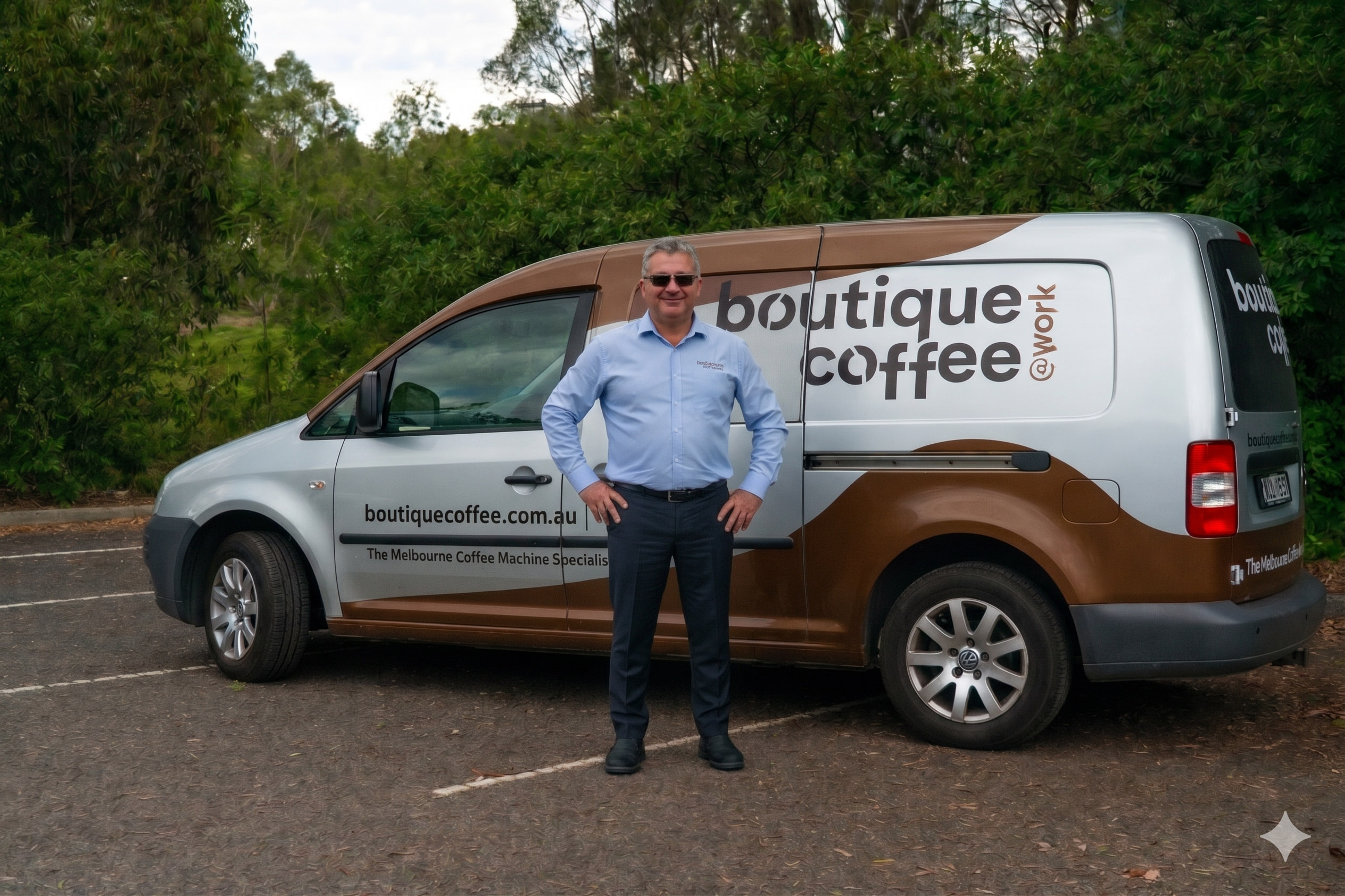
Chris
Chris
Keep reading
Office Coffee Machine Rental FAQs: Straight Answers for Melbourne Workplaces
Office coffee machine rental means paying a monthly fee to use a commercial machine that the supplier installs, services and looks after, rather than buying it…
Commercial Coffee Machine Leasing in Melbourne: Lease vs Month-to-Month Rental
Commercial coffee machine leasing is a fixed-term arrangement where a finance company buys the machine and your business pays regular instalments over several…
Office Coffee Machine Rental Services in Melbourne: How the Process Actually Works
An office coffee machine rental service in Melbourne supplies a commercial-grade machine, installs it properly, trains your staff, and keeps beans and…