
An office coffee subscription is better when you already own suitable equipment and only need fresh beans delivered. Machine rental suits offices needing commercial equipment without buying it outright. For most established workplaces, a combined managed service offers the strongest balance of predictable costs, flexible supply, equipment support and operational accountability.
Introduction
Choosing between beans and equipment is only part of the decision. You also need to decide who handles installation, maintenance, stock levels and breakdowns. The right structure gives your team reliable coffee without forcing an office manager to become a machine technician or inventory controller.
Melbourne workers already know what good coffee tastes like. The instant coffee inside the office should not feel disconnected from the cafés outside its door. This guide compares bean subscriptions, machine rentals and combined managed plans, including their costs, risks and practical fit.
Key takeaways
The best option depends on your existing machine, team size and appetite for operational responsibility. Bean subscriptions offer simplicity, while rentals reduce equipment expenditure. A combined service is usually the better fit when an office wants one provider accountable for equipment, coffee supply and ongoing support.
- Choose a bean subscription if you own a reliable commercial machine and can manage cleaning and servicing.
- Choose machine rental if equipment access matters more than automated bean supply.
- Choose a combined managed service when reliability and one point of accountability are priorities.
- Compare total operating cost, not just the rental or bag price.
- Confirm contract terms, GST, delivery charges and breakdown support before signing.
- Match the machine to actual daily demand rather than buying unnecessary capacity.
Summary table
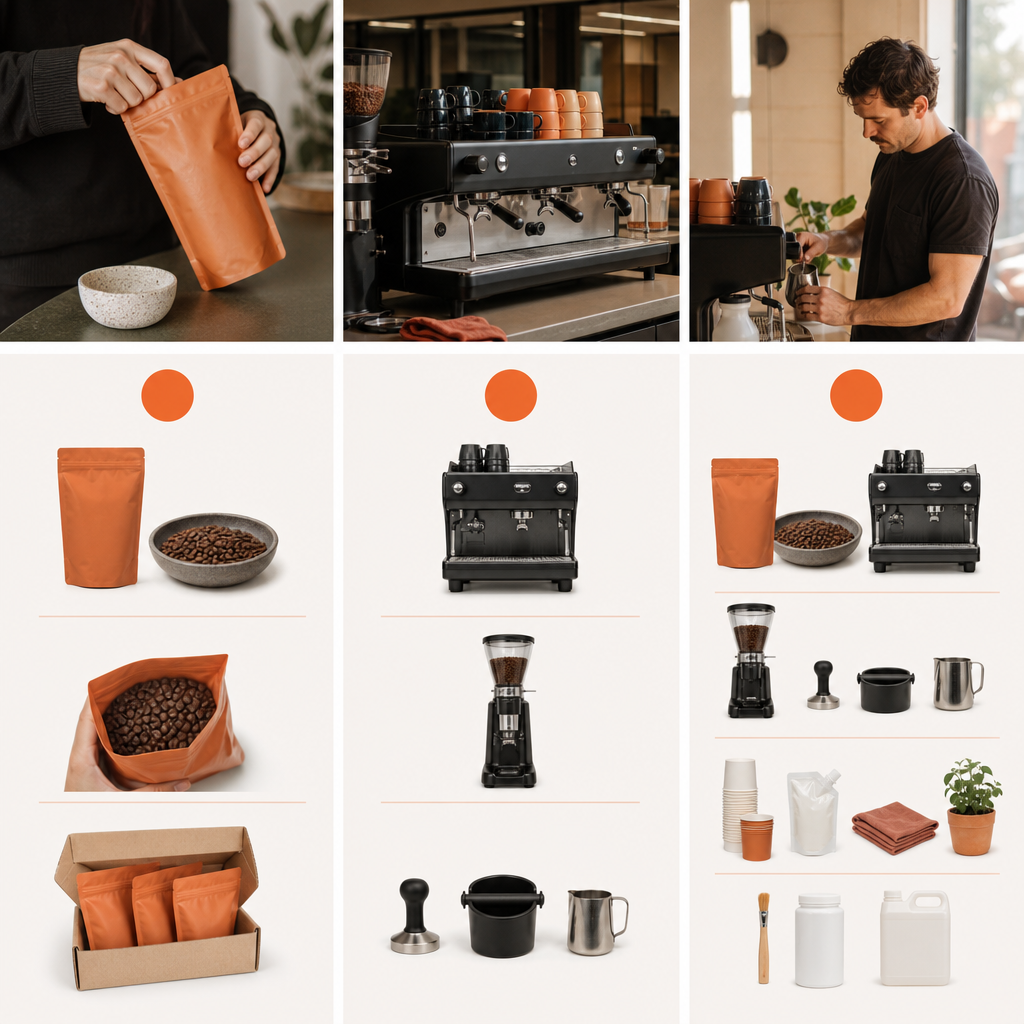
This comparison separates what each model usually includes, who carries the operational risk and where each option works best. Supplier inclusions vary, so treat the table as a decision framework rather than a substitute for a written quote. Always confirm equipment, servicing, consumables and cancellation terms.
| Option | Usually includes | Main advantage | Main limitation | Best fit |
|---|---|---|---|---|
| Bean subscription | Scheduled coffee bean deliveries | Simple replenishment and access to fresh coffee | Office remains responsible for equipment | Workplaces with a suitable owned machine |
| Machine rental | Use of a coffee machine, with service terms varying by supplier | Avoids an upfront machine purchase | Beans and consumables may remain separate | Offices needing commercial equipment |
| Combined managed service | Machine, installation, beans and ongoing service under one arrangement | One provider is accountable for the complete setup | Requires accurate usage planning | Offices wanting predictable supply and support |
| Machine purchase | Full ownership of equipment | Long-term control over the asset | Upfront cost and maintenance responsibility | Businesses with internal facilities capability |
What does an office coffee subscription include?
An office coffee subscription usually provides recurring deliveries of beans at an agreed quantity and frequency. Better plans also allow blend changes and delivery adjustments as consumption changes. A bean-only subscription does not automatically include a machine, installation, cleaning, repairs, milk, chocolate or other workplace consumables.
Bean subscriptions are straightforward when the office already has a suitable machine. The supplier sends coffee weekly, fortnightly or monthly, depending on the agreed schedule. This removes repeated ordering and reduces the chance of running out.
The limitation is equipment responsibility. If the grinder is incorrectly adjusted, the machine needs descaling or a component fails, bean delivery alone will not solve the problem. You need internal capability or a separate technician.
Coffee selection also matters. Sending the same blend to every workplace ignores how differently teams drink coffee. An office dominated by milk-based drinks may need a different roast profile from a team drinking short blacks.
Our Curated Coffee Plan starts with three questions:
- Does the team mainly drink espresso or milk-based coffee?
- How strong do they prefer it?
- Are there flavours or roast styles they dislike?
We then select a starting blend and adjust it using team feedback within the first month. You can review Boutique Coffee's workplace coffee range, but the best choice should still be made around the people drinking it.
Coffee machine rental vs subscription: what is the difference?
Coffee machine rental gives your office access to equipment without purchasing it outright. A subscription supplies coffee on a recurring schedule. The two can operate separately, but separating them creates multiple responsibilities. A combined plan puts the machine, beans and service under one accountable provider.
A traditional rental arrangement may cover the machine and scheduled servicing. Beans are ordered separately, sometimes from another business. This can create confusion when coffee quality declines. The bean supplier may blame the grinder, while the equipment supplier may blame the coffee.
A bean subscription has the opposite weakness. Supply is automated, but equipment availability remains the office's problem. This can work for a small team with a reliable machine. It becomes riskier when many people depend on the same unit throughout the day.
A managed coffee service closes that gap. It can include:
- commercial machine selection
- installation and grinder calibration
- staff training
- recurring bean deliveries
- scheduled maintenance
- breakdown support
- supply adjustments as attendance changes
- optional chocolate and related consumables
The phrase "managed coffee service Australia" is used loosely. Some suppliers mean little more than equipment rental with recurring invoices. Ask what is genuinely managed and who takes responsibility when something fails.
Which option costs less over time?
A bean subscription normally has the lowest visible commitment because it excludes equipment. That does not always make it the cheapest operating model. Repairs, internal ordering time, excess stock and machine downtime can sit outside the subscription price. Compare the total cost of keeping coffee available, not one monthly line item.
Start with the costs you can see:
- machine rental or purchase
- coffee beans
- delivery
- scheduled maintenance
- breakdown call-outs
- cleaning products
- filters and consumables
- installation or removal fees
Then assess operating costs that may not appear on an invoice. Someone must monitor stock, place urgent orders, report faults and deal with separate suppliers. These tasks are easy to dismiss because they are spread across an office manager's week.
The equipment also needs to suit real demand. In my experience, a small team does not need an expensive high-volume machine. Conversely, a large office can wear out equipment designed for light domestic use. Recommending the cheapest machine without checking volume can be as wasteful as upselling unnecessary capacity.
The 3P Digital case study referenced in the content brief reported a 15% saving from a combined subscription model. That figure is specific to the arrangement examined in that case study. It should not be treated as a universal saving. Its practical lesson is that bundling can remove duplicated charges and make usage easier to manage.
To compare proposals properly, ask each supplier to quote against the same assumptions. Include team size, expected office attendance, preferred drinks, existing plumbing and anticipated daily demand. Otherwise, the lowest quote may simply contain fewer services.
How do currency and GST affect the comparison?
Australian office coffee quotes should clearly state whether prices are in AUD, whether GST is included and whether delivery or servicing attracts additional charges. A low monthly figure is not comparable with an all-inclusive quote if essential costs are excluded. Ask for the complete recurring and exit costs in writing.
The Australian Taxation Office states that GST is generally 10% on most goods and services sold in Australia (ATO). Businesses should confirm how GST is shown on the quote and tax invoice rather than assuming it is included.
Currency is unlikely to be complicated when dealing with a Melbourne supplier quoting in AUD. However, imported equipment can still influence replacement parts, machine availability and pricing. You do not need to predict currency movements. You do need to ask whether the quoted monthly rate can change and under what conditions.
Check these items before accepting a quote:
- Is every amount stated in AUD?
- Does the displayed price include GST?
- Are delivery, installation and pickup included?
- Are scheduled services included?
- What does an unscheduled call-out cost?
- Can bean quantities change without resetting the agreement?
- Is there a price review clause?
Why a combined monthly office coffee service is often better

A combined monthly office coffee service is usually better when the office wants predictable supply and minimal internal administration. The strongest model combines correctly sized equipment, dialled-in beans, planned replenishment and responsive servicing. Its value comes from aligned responsibility, not merely packaging several invoices together.
Consider what happens when coffee quality suddenly drops. Under a fragmented setup, the office may contact the roaster, machine rental company and service technician separately. Under a properly managed arrangement, one person checks the beans, grinder, machine and usage pattern.
That is why my preference is one number, one person. No call centres, no corporate runaround. Most simple issues can be diagnosed quickly when the person answering already knows the machine and site.
Boutique Coffee's 2026 business records show more than 200 active Melbourne workplace rental clients. The average active client relationship exceeds five years, while the typical response time for service calls is within 24 hours. These are our own operating figures, not industry benchmarks.
Flexibility matters as much as response time. Our rentals operate month-to-month, with one month's notice and free machine pickup. No lock-in, ever. The principle is simple: a client retained by service is more valuable than one retained by contractual friction.
A managed plan should also adapt when office attendance changes. If consumption falls, bean deliveries should be reduced before stock becomes stale. If the team grows, the supplier should review both delivery frequency and machine capacity.
How should you compare office coffee quotes?
Compare office coffee quotes by testing scope, flexibility and accountability rather than looking only at the monthly price. The supplier should explain why the proposed machine fits your team, exactly what servicing includes, how quickly faults are handled and whether coffee quantities can change without penalties.
Use the following checklist during each supplier conversation.
Machine fit
Ask how the supplier estimated capacity. Team size alone is not enough. A workplace with concentrated morning demand places different pressure on a machine than one with evenly spread usage.
The supplier should assess drink preferences too. Milk-heavy demand affects workflow and cleaning. A large office may need faster output, separate milk handling or a different grinder configuration.
Boutique Coffee has installed equipment for a single workplace serving more than 400 people, according to our 2026 installation records. That does not mean every large machine is appropriate. It means equipment selection should reflect demand, available space and serving expectations.
Installation requirements
Commercial machines may require suitable power, water, drainage and bench space. These conditions should be checked before installation day. Safe Work Australia's model code for managing plant risks also supports identifying workplace plant hazards and applying appropriate controls (Safe Work Australia).
A remote recommendation based on headcount can miss practical constraints. An on-site assessment reduces the risk of discovering an unsuitable power point or restricted bench after the machine arrives.
Service scope
Do not accept "maintenance included" without clarification. Ask whether this covers preventive servicing, parts, labour and call-outs. Confirm the response process and who owns the issue until it is resolved.
Contract flexibility
Review notice periods, automatic renewals, pickup fees and price review clauses. The ACCC recommends that businesses understand contract terms, including termination rights and unfair contract term protections (ACCC). Obtain the final terms in writing.
Coffee flexibility
Check whether you can change blend, quantity or frequency. A fixed shipment can create waste when staff take leave or office attendance falls. It can also leave the office short during busy periods.
How does setup work with a managed coffee service?
A managed service should move from enquiry to installation through a clear sequence: understand the team, shortlist equipment, inspect the site, install correctly, train staff and establish a replenishment rhythm. Boutique Coffee uses its Six-Step Process to complete these tasks without treating installation as the end of the relationship.
For most Melbourne clients, our Six-Step Process is designed to move from first call to an installed machine within 5-7 business days. These timings are Boutique Coffee's own operating targets and depend on equipment availability and site readiness.
- Enquiry: The client submits basic team and workplace details. This usually takes about two minutes.
- Phone call with Chris: A 15-20 minute discussion covers drink preferences, machine options and rough pricing.
- On-site visit: A 30-minute inspection checks power, plumbing, drainage and bench space.
- Install day: The machine is connected, the grinder is dialled in and test shots are assessed. Installation typically takes 45 minutes when the site is ready.
- First brew and training: At least two staff members receive about 20 minutes of practical training, supported by a simple cheat sheet.
- Ongoing rhythm: Weekly or fortnightly visits are scheduled according to consumption, with beans and agreed consumables topped up.
You can see the complete managed coffee service process before requesting a site assessment.
The real cost is split accountability
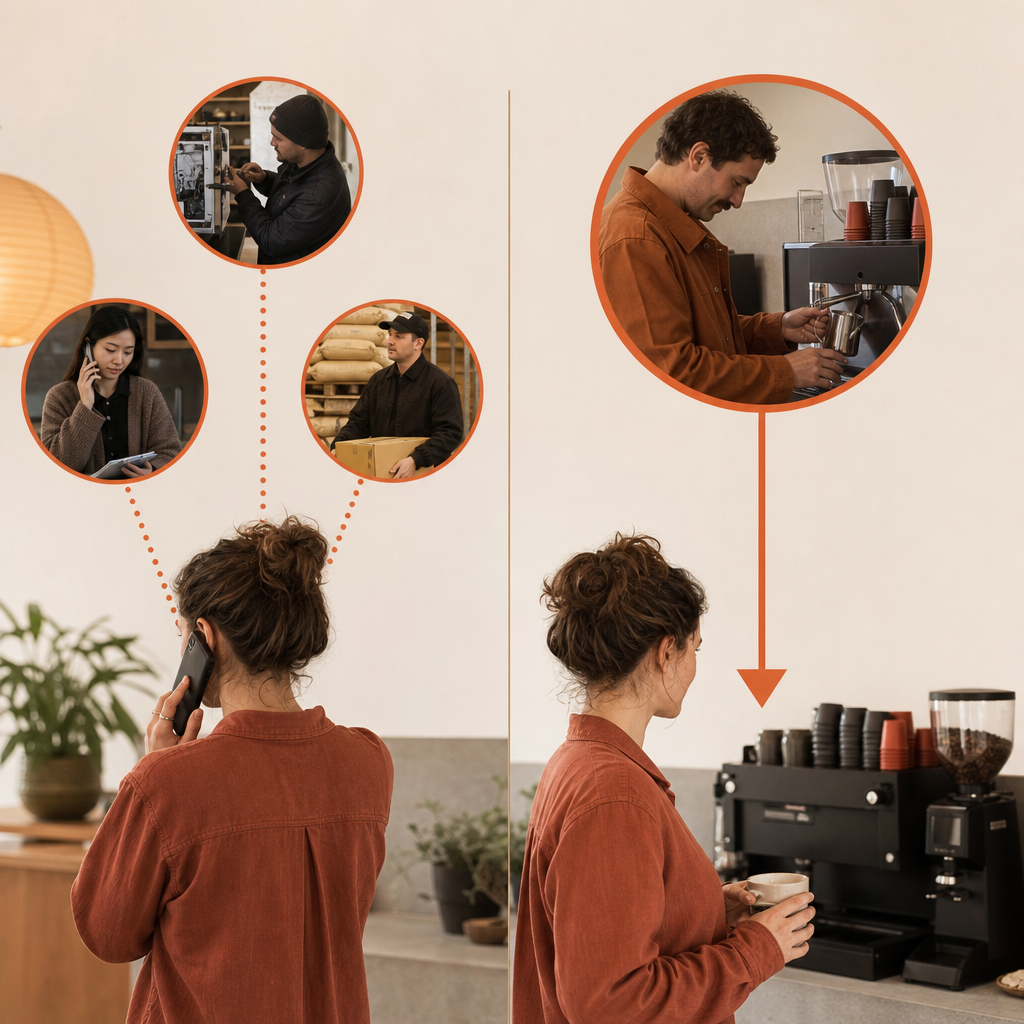
The biggest weakness in many office coffee arrangements is not bean quality or machine specification. It is split accountability. When different companies supply equipment, coffee and repairs, nobody owns the complete result. My view is direct: workplace coffee works better when one person remains responsible from site visit onwards.
I saw this clearly at a mid-size Melbourne office whose existing coffee setup was not meeting the team's expectations. I upgraded the site to a WMF commercial machine, completed the installation and training, then managed the coffee and ongoing service.
The office reported that the machine was easy to use and that staff consistently enjoyed the coffee and hot chocolate. The important result was not a short-lived installation buzz. It was that the service remained consistent over the following years.
At another busy Melbourne workplace, a failed machine used to create havoc during peak office hours. A reliably maintained machine, scheduled servicing and direct personal contact removed the repeated disruption. The lesson was straightforward: your team never goes without coffee when preventive service and fault responsibility sit with the same person.
This is also why I do not believe in upselling equipment for hypothetical growth. The machine should fit the team that will use it. If the cheaper option is the honest fit, that is the recommendation. Long-term relationships are built by getting that first decision right.
I am not trying to be the biggest. Boutique Coffee is founder-led, always. The aim is to be a coffee partner, not a supplier, with each plan designed around your culture and budget.
References
The sources below support the Australian contract, GST and workplace equipment guidance used in this article. Business performance figures and service timings are drawn from Boutique Coffee's supplied 2026 operating records. The reported combined-plan saving comes from the 3P Digital case study identified in the content brief.
- Australian Competition and Consumer Commission, Contracts
- Australian Taxation Office, GST
- Safe Work Australia, Model Code of Practice: Managing the Risks of Plant in the Workplace
- Boutique Coffee, active client, installation and service records supplied for this article, 2026.
- 3P Digital, combined office coffee subscription case study result supplied in the content brief.
FAQ_SCHEMA_JSON
Frequently asked questions
Is an office coffee subscription the same as machine rental?
No. A coffee subscription usually covers recurring bean deliveries. Machine rental gives the workplace access to equipment for a recurring fee. A combined managed plan can include both, along with installation, maintenance, training and replenishment.
Can an office change its coffee delivery quantity?
A flexible subscription should allow quantity and frequency changes as consumption moves. Confirm the adjustment process before signing. Boutique Coffee reviews supply against actual use, helping avoid stale excess stock and urgent replacement orders.
Who owns the machine under a rental plan?
The rental provider generally retains ownership unless the agreement contains a purchase or ownership provision. The office uses the machine according to the rental terms. Check responsibility for damage, servicing, relocation and collection in the written agreement.
What happens if the coffee machine breaks down?
The response depends on the service agreement. A managed plan should identify one contact, define included repairs and explain the expected response. Boutique Coffee's own 2026 service records show a typical service-call response time within 24 hours across its active client base.
Are office coffee subscription prices GST-inclusive?
Not necessarily. Australian quotes should state whether GST is included or added. The ATO says GST is generally 10% on most Australian goods and services. Check the quote, recurring invoice and any delivery or service charges.
How do I get a custom office coffee subscription quote?
Provide your team size, location, current equipment, drink preferences and expected attendance pattern. A site visit can then confirm machine and installation requirements. Contact Boutique Coffee for a custom subscription quote built around your workplace rather than a generic package.

Chris
Chris
Keep reading
Company credentials and commercial coffee experience
Company credentials and commercial coffee experience should prove that a provider can select, install, supply and maintain the right workplace coffee system…
Office Coffee Machine Rental FAQs: Straight Answers for Melbourne Workplaces
Office coffee machine rental means paying a monthly fee to use a commercial machine that the supplier installs, services and looks after, rather than buying it…
Types of Office Coffee Machines: Finding the Right System for Your Australian Business
Office coffee machine types fall into four main categories: automatic bean-to-cup, traditional espresso, filter or batch brew, and pod or capsule systems. The…