I have spent 17 years driving throughout Melbourne attending to my clients' coffee machine requirements. Since founding this business in 2008, I have seen every office coffee trend come and go. But the shift toward sustainable workplace coffee is not a passing trend. It is a necessary change in how we do business.
The gap between the café quality outside the door and the instant coffee inside the office never made sense to me. Neither does the massive environmental toll of bad office coffee habits. Australian businesses throw away millions of aluminium and plastic coffee pods every year. Add single-use cups, non-recyclable milk packaging, and ignored coffee grounds to the mix, and the environmental cost becomes staggering.
It is entirely possible to serve café-quality, made practical, while drastically cutting your office's environmental footprint. The solution requires moving past the capsule mindset and investing in proper systems. This guide details the true environmental impact of office coffee, compares the available hardware, and provides a direct roadmap to achieving genuine office coffee waste reduction. We will look at commercial coffee machine recycling, compostable coffee pods in Australia, and how to build a zero-waste coffee station.
Key Takeaways
- Bulk bean-to-cup machines drastically reduce landfill waste compared to individual aluminium or plastic pods.
- Compostable coffee pods in Australia require specific commercial composting facilities to actually break down.
- Implementing a coffee ground composting program is the easiest first step toward a zero-waste coffee station.
- Sourcing local Australian beans lowers transport emissions and supports local roasters.
- The right machine matched to your team size prevents premature hardware replacement and commercial coffee machine recycling headaches.
- True sustainability is about long-lasting equipment, dialled-in beans, and founder-led service that keeps your machine running for years.
Comparing Eco-Friendly Office Coffee Solutions
| Solution | Waste Output | Sustainability Profile | Equipment Lifecycle | Office Suitability |
|---|---|---|---|---|
| Aluminium Pods | High (requires dedicated recycling programmes) | Low (energy-intensive production and collection reliance) | 2-3 years (low-grade machines burn out) | Small teams of 1-5 people |
| Compostable Pods | Medium (requires commercial composting to degrade) | Medium (reduces plastic but fails in landfill) | 2-3 years (pod machine lifespan) | Small teams conscious of waste |
| Plastic Pods | Very High (mostly ends up in landfill) | Very Low (petroleum-based plastic) | 2-3 years (disposable hardware) | Not recommended for eco-conscious businesses |
| Bulk Bean-to-Cup | Low (biodegradable coffee grounds and paper filters) | High (minimal packaging, zero plastic pods) | 7-10+ years (commercial-grade durability) | Medium to large teams of 10-400+ people |
The True Environmental Cost of Office Coffee Pods
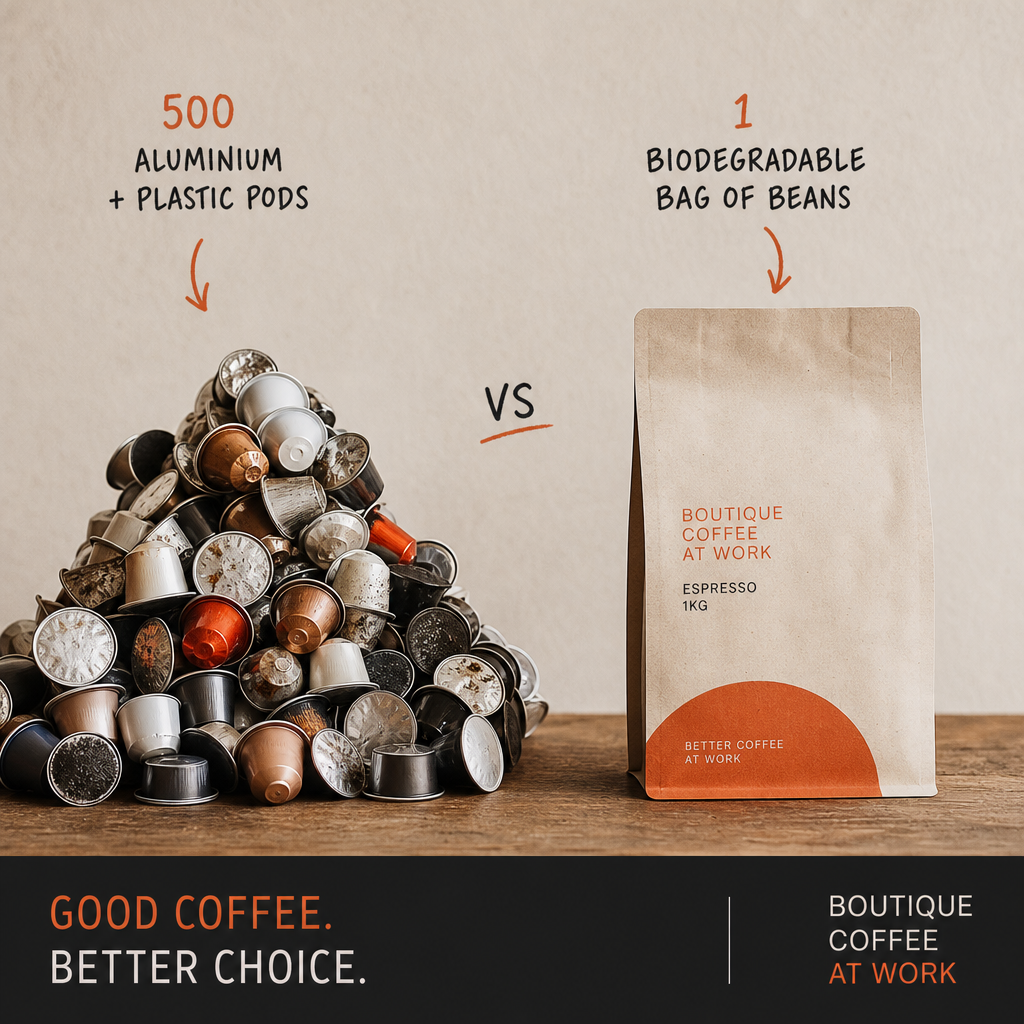
Walk into any break room in the Melbourne CBD or surrounding suburbs, and you will likely find a pod machine. They are cheap to buy upfront. They are also an environmental disaster.
When we talk about eco-friendly office coffee, we have to start with the hardware and consumables. Aluminium and plastic pods present a massive waste management problem. Aluminium production is highly energy-intensive. While aluminium is technically recyclable, the recovery rate for small coffee pods is incredibly low. Most pods end up in general waste. In landfill, aluminium takes anywhere from 80 to 200 years to break down.
Plastic pods are worse. They are made from a mix of plastics and aluminium foil linings that standard municipal recycling facilities cannot process. They fragment into microplastics over hundreds of years.
Industry reports indicate that billions of coffee pods end up in global landfill annually. In Australia, the push for office coffee waste reduction has seen the introduction of specialised collection programmes by brands like Nespresso. However, relying on corporate collection programmes is an inefficient way to manage office sustainability. It requires dedicated bins, staff compliance, and constant logistics. The actual recycling rate of collected pods remains lower than the marketing suggests.
Why Compostable Coffee Pods in Australia Are Not a Silver Bullet
Many offices switch to compostable coffee pods in Australia thinking they have solved the problem. They have not. This is a classic case of greenwashing.
Compostable pods are usually made from plant-based bioplastics, such as PLA (polylactic acid). These materials will break down, but only under specific conditions. They require temperatures of 55 to 60 degrees Celsius to decompose. These temperatures are only found in commercial composting facilities.
If you throw a compostable pod into a standard office rubbish bin, it goes to landfill. In landfill, compacted under tons of waste without oxygen, it behaves exactly like a conventional plastic pod. It will sit there for decades. Most local councils in Australia do not accept bioplastics in residential or standard commercial green waste bins.
Unless your office is located in a precinct that has direct access to a commercial organic waste collection service, compostable pods are not an eco-friendly office coffee solution. They are just a guilt-free feeling attached to a piece of unrecyclable plastic.
Bulk Bean-to-Cup Machines: The Superior Eco-Friendly Choice
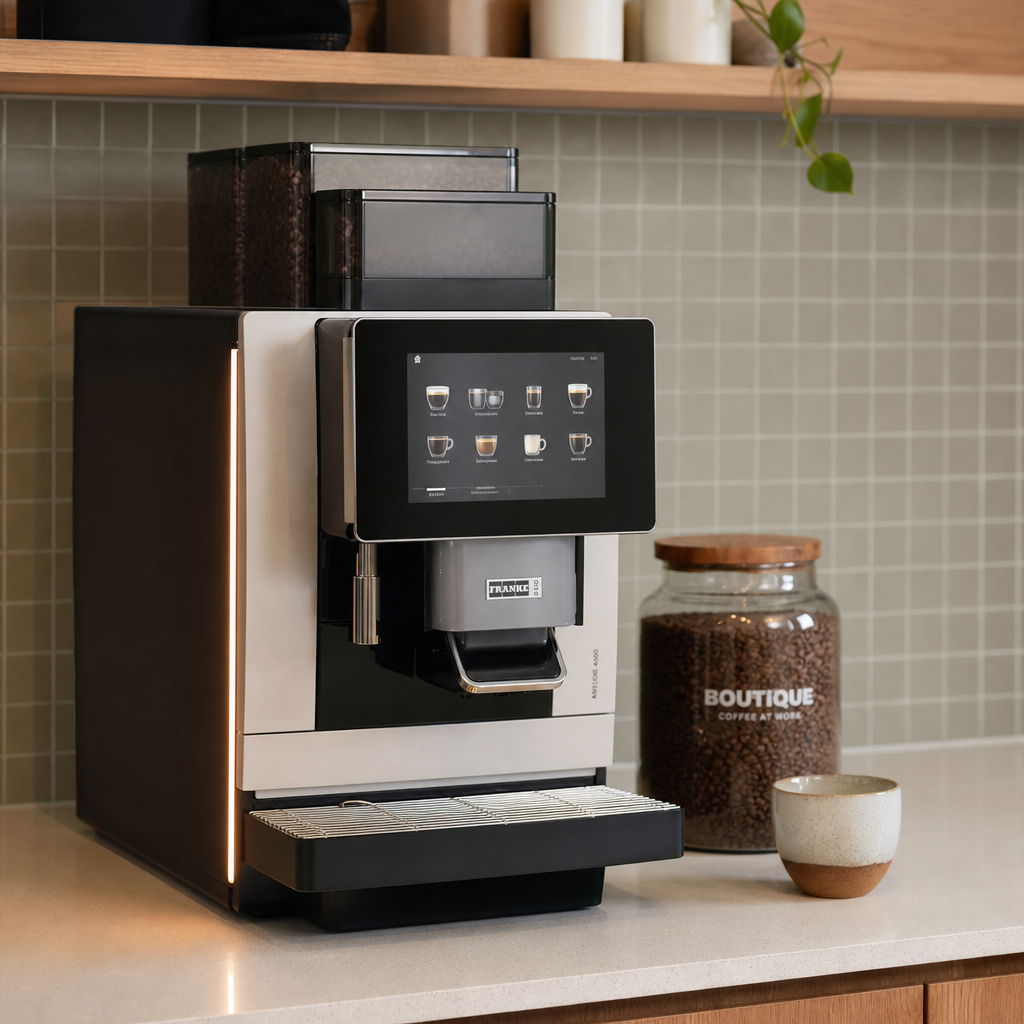
If you want genuine sustainable workplace coffee, you need a bulk bean-to-cup machine. These machines eliminate pods entirely.
Instead of dealing with tiny plastic or aluminium capsules, a commercial bean-to-cup machine grinds whole coffee beans on demand. The only byproduct is spent coffee grounds. Spent coffee grounds are 100 percent organic, biodegradable, and highly beneficial for compost.
Reduced Packaging and Logistics
Whole beans come in lightweight foil bags. A single 1-kilogram bag of beans can produce around 120 cups of coffee. Compare that to 120 individual foil-wrapped pods, a large plastic tray, cardboard outer packaging, and the courier emissions required to ship that volume of bulky pods.
By switching to bulk beans, your office immediately cuts its coffee-related packaging waste by up to 90 percent. We manage the supply chain to keep your beans fresh, delivering locally throughout Melbourne without the massive carbon footprint of continuous pod deliveries.
Machine Lifespan and Commercial Coffee Machine Recycling
Pod machines are consumer-grade electronics. They are built with planned obsolescence. A standard pod machine in a busy office will last 12 to 18 months before the pump fails or the heating element burns out. When it dies, the entire unit usually goes into electronic waste.
Commercial bean-to-cup machines are built differently. At Boutique Coffee, we supply premium commercial hardware. For example, I recently upgraded the Melbourne office of Pepperl+Fuchs Australia. They were running an existing coffee setup that was failing to meet team expectations. I installed a WMF commercial machine. The change was noticeable across the whole office. The site manager, Paul Bruno, reported easy daily use, great coffee quality, and consistent service maintained for years.
These machines last 7 to 10 years or more with proper maintenance. When they do reach the end of their life, commercial coffee machine recycling is a mature industry. The stainless steel, copper, and internal components are heavy, valuable, and easily stripped and recycled by professional e-waste facilities. Commercial machines are a long-term asset, not disposable consumer electronics.
Sourcing Sustainable Workplace Coffee
Sustainability does not end at the machine. The beans themselves matter. This is why we implement our Curated Coffee Plan for every new client.
Local Australian Roasters and Fair Supply Chains
Transporting coffee beans across the globe generates carbon emissions. While the raw green beans must come from coffee-growing regions near the equator, roasting them locally reduces the overall carbon footprint. We prioritise Australian-roasted beans.
Beyond transport emissions, ethical sourcing is critical. We look at the supply chain to ensure farmers are paid fairly. Sustainable agriculture relies on buyers paying a living wage, which funds environmentally friendly farming practices rather than mass, deforestation-heavy production.
The Curated Coffee Plan
Our Curated Coffee Plan is simple. We ask about the team's drink preferences. We find out if they lean toward espresso or milk-based drinks. We assess their preferred strength and any specific dislikes.
We start the team on a well-matched blend based on that profile. Then, we adjust based on team feedback within the first month. We use local roasters who batch roast to order. This ensures your team is not drinking beans that have been sitting in a warehouse degrading for months. Fresh beans mean better extraction, less waste from undrinkable coffee, and happier staff.
Office Coffee Waste Reduction Strategies
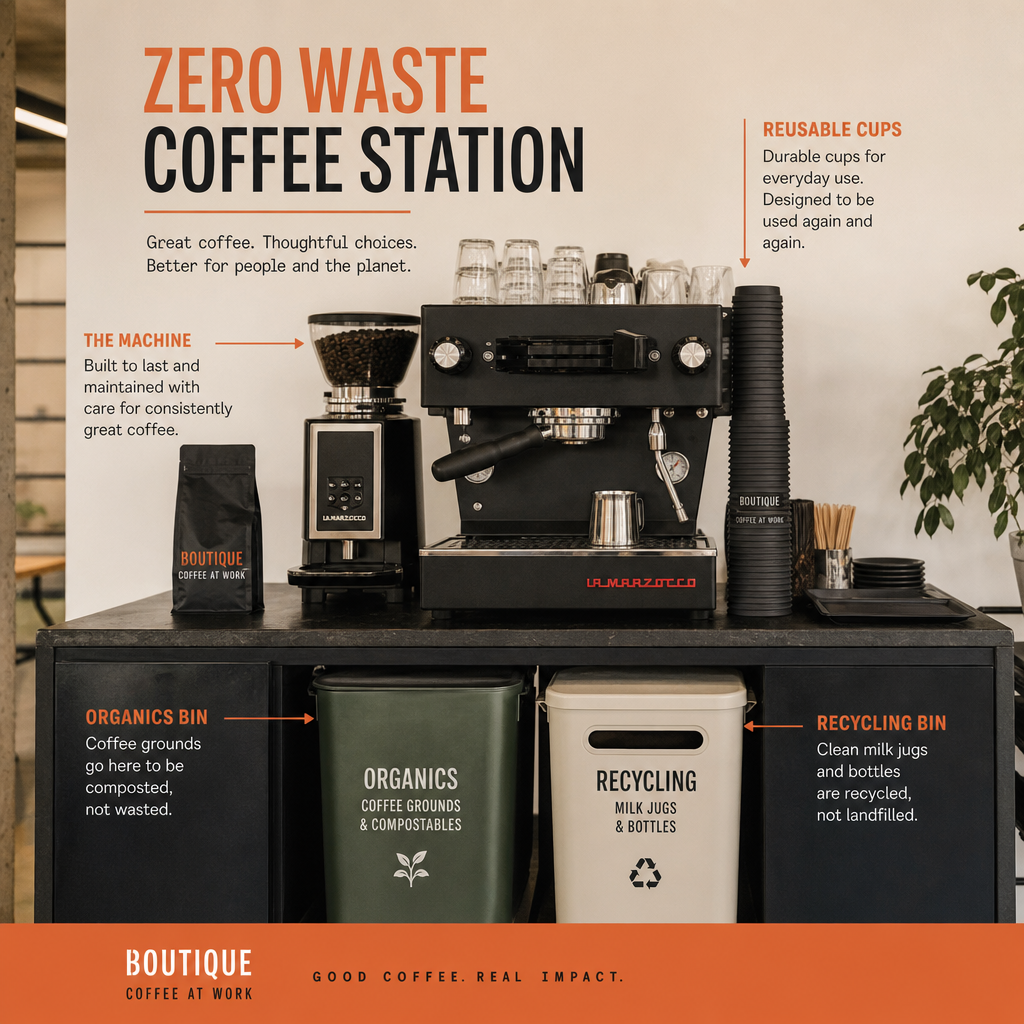
Installing a bean-to-cup machine is the first step. To run a truly zero-waste coffee station, you need to manage the peripheral waste. This includes cups, milk containers, and coffee grounds.
Implementing a Coffee Ground Composting Program
A medium-sized Melbourne office of 50 people can easily go through 3 to 5 kilograms of coffee beans a week. That equates to roughly 15 to 25 kilograms of wet, heavy coffee grounds dumped into landfill every single month.
When organic waste like coffee grounds decomposes in landfill, it produces methane. Methane is a greenhouse gas that is over 25 times more potent than carbon dioxide at trapping heat in the atmosphere.
Setting up a coffee ground composting program is the easiest way to fix this.
- Provide a dedicated, sealed commercial organics bin next to the coffee machine.
- Clearly label it for coffee grounds only (staff will inevitably try to put general waste in it).
- Engage a local commercial organics collection service to empty the bin weekly.
- Alternatively, if your office is in a suburban Melbourne area with a garden, offer the grounds to staff for their home gardens. Coffee grounds are an excellent nitrogen-rich fertiliser.
Biodegradable Cups and Reusable Alternatives
Single-use cups are a massive problem. Even so-called biodegradable or bio-plastic cups suffer from the same commercial-composting limitations as compostable pods.
To eliminate cup waste:
- Supply high-quality branded ceramic cups and glasses for staff.
- Provide durable keep cups for team members who regularly walk back to their desks.
- For external visitors, source genuinely recyclable paper cups. Ensure they have no plastic lining, or invest in a dedicated cup recycling programme like Simply Cups, which collects and processes specific cup waste into new building materials.
Milk Management
Milk is another major source of waste. Plastic milk jugs can be recycled, but they must be thoroughly rinsed out first. A better approach for high-volume offices is installing a bulk milk dispenser. These use large, reusable stainless steel churns. Local dairies deliver the milk and take back the empty churns for reuse. This eliminates plastic bottle waste entirely.
Designing a Zero-Waste Coffee Station
To build a zero-waste coffee station, the physical layout of the hardware matters. You need to design the space so that the eco-friendly choice is the easiest choice for your staff.
In my Six-Step Process, the on-site visit is where we make this happen. Here is how to structure the station.
Step 1: The Machine Placement
Place the machine on a solid, stable bench near existing plumbing and power. Do not place it above a carpeted area. Ensure there is adequate drainage. A commercial machine with a direct plumbing line eliminates the need for staff to constantly fill a water tank, reducing spillage and ensuring the machine runs efficiently.
Step 2: The Waste Flow
Set up clearly coloured bins directly beneath or beside the machine.
- Yellow bin: For recyclables like rinsed milk jugs.
- Green bin: For organic waste. Instruct staff to knock the coffee puck directly from the portafilter into this bin.
- Red bin: For general waste, kept slightly out of the way to encourage sorting.
Step 3: Consumables Storage
Store your coffee beans in a cool, dark cupboard near the machine. Keep them in their original one-way valve bags to maintain freshness. This keeps the bench clear and the beans protected from UV light, which degrades the oils and ruins the taste.
The Boutique Coffee Approach to Sustainability
I am not trying to be the biggest. I aim to be the most reliable. For me, sustainability is not just about waste reduction. It is about business longevity and equipment durability.
I operate a founder-led, always business model. This means one number, one person. When something goes wrong with a machine, we fix it. We do not force you to throw it away and buy a new one.
Corporate coffee suppliers route client issues through helpdesks, ticket systems, and tiered support teams. This leads to frustrated staff and abandoned machines. I believe one person must stay accountable for every client, from setup to ongoing service, with a single phone number and no escalation paths.
AJM-JV, a busy Melbourne workplace, was experiencing disruption whenever their coffee machine went down during peak office hours. I provided a reliably maintained machine with regular scheduled servicing and direct personal contact for any issue. The client, Chrissie Straw, noted that reliable, regular service meant the team always had coffee when they needed it most, eliminating the havoc a broken machine caused. Keeping a machine running perfectly for over 5 years is the most sustainable thing a business can do.
Most suppliers lock clients into long-term contracts to protect their revenue. They claim it is standard practice for equipment rental. I completely disagree. All my rentals are month-to-month with one month's notice to exit and free machine pickup. In 17 years, this no lock-in, ever policy has never cost a client worth keeping. Long-term clients retained by choice are worth more than clients retained by contract.
Honest Sizing Over Upselling
Another common issue is upselling. Many suppliers push higher-specification machines to increase deal value, claiming it serves the client's future growth needs. I recommend the machine that fits the team's actual size, even if that is the cheaper option.
A 12-person team does not need an automated $15,000 Eversys. An 80-person team will break a home-grade Jura within a month. Honest fit advice builds the long-term client relationships that are worth more than one inflated first invoice.
This philosophy is woven into my Six-Step Process, designed to take most Melbourne clients from first call to installed machine in 5 to 7 business days.
- Enquiry: You submit basic team details. Takes 2 minutes.
- Phone call with me: We discuss a machine shortlist and rough pricing. Takes 15 to 20 minutes.
- On-site visit: I assess your power, plumbing, and bench space. Takes 30 minutes.
- Install day: I connect the machine, dial in the grinder, and test the shots. Takes 45 minutes.
- First brew and training: I train at least two staff members and leave a cheat sheet. Takes 20 minutes.
- Ongoing rhythm: I handle weekly or fortnightly service visits. Beans and consumables are topped up. We ensure your team never goes without coffee.
We currently manage over 200 active Melbourne workplace clients. Our average client relationship length is over 5 years. Our typical response time on any service call is 24 hours. We are chosen on purpose because we deliver reliable, local, and sustainable results.
If you want to upgrade your office coffee experience and reduce your environmental impact, I am ready to help. We can build a solution designed around your culture and budget. You can view our available coffee solutions directly, or reach out via our contact page to arrange a site visit.
References
- Sustainability Victoria: "Organic waste and composting guidelines for businesses"
- Australian Packaging Covenant Organisation (APCO): "National packaging targets and recyclability standards"
- Planet Ark: "Coffee recycling programmes and environmental impact data"
- Clean Up Australia: "Statistics on single-use coffee cups and pod waste in landfill"
Frequently asked questions
What is the most eco-friendly office coffee machine?
A commercial bean-to-cup machine is the most eco-friendly option for medium to large offices. Unlike pod machines that generate vast amounts of aluminium or plastic waste, bean-to-cup machines use whole beans and produce only biodegradable coffee grounds. They are built to commercial durability standards, meaning they last up to a decade with proper maintenance, avoiding the e-waste generated by replacing cheap consumer pod machines every two years.
Are compostable coffee pods actually better for the environment?
Only if your office has access to a commercial composting facility. Compostable pods are made from bioplastics that require sustained high temperatures to break down. If they are placed in a standard rubbish bin and sent to landfill, they will not decompose properly and will release methane. In most Australian municipal contexts without commercial organics collection, they are no better than standard plastic pods.
How can my office reduce coffee waste?
You can reduce coffee waste by switching from pods to a bulk bean-to-cup machine. Provide reusable ceramic cups for staff instead of single-use paper cups. Implement a strict coffee ground composting program using a dedicated organics bin. Finally, transition from individual plastic milk bottles to a bulk milk dispenser that uses reusable stainless steel churns.
Does Boutique Coffee supply sustainable coffee beans?
Yes. We source premium beans from local Australian roasters. Through our Curated Coffee Plan, we match the specific roast and blend to your team's preferences, ensuring minimal waste from undrinkable coffee. We focus on fresh, batch-roasted supply chains that support ethical farming and reduce transport emissions.
What happens if the commercial coffee machine breaks down?
We handle all maintenance and servicing directly. Because we operate a founder-led model, you have a single phone number to call. Our average response time is 24 hours. We repair the machine on-site, ensuring your commercial hardware lasts its full lifecycle. You are never left dealing with offshore call centres or waiting weeks for a replacement.
Do you offer commercial coffee machine recycling?
When a commercial machine reaches the end of its long lifecycle, we ensure it is disposed of responsibly. Commercial machines contain high amounts of stainless steel, copper, and brass. We partner with local Melbourne e-waste recycling facilities to strip and process these metals, keeping heavy electronics out of landfill.
Is there a lock-in contract for your office coffee rentals?
No. All our commercial coffee machine rentals are strictly month-to-month. You only need to provide one month's notice to exit, and we will pick up the machine for free. We believe in retaining clients through quality service and café-quality coffee, not restrictive legal contracts.
Chris
Chris
Keep reading
Office Coffee in Melbourne: The Complete Workplace Guide to Machines, Costs, Beans and Service
The best office coffee in Melbourne comes from a commercial bean-to-cup or espresso machine sized to your headcount, rented month-to-month with installation,…
Office Coffee Machine Rental in Melbourne: Find Your Next Step by the Question You're Asking
Office coffee machine rental in Melbourne means paying a monthly fee for a commercial machine that comes installed, serviced and supplied with beans by one…
The Melbourne Office Coffee Guide: Start Here to Choose, Rent and Run a Proper Workplace Coffee Machine
The simplest way to get proper coffee into a Melbourne office is to rent a commercial machine month-to-month from a local supplier that installs it, trains…